
Advanced Manufacturing Techniques for Inconel Alloys: Boosting Performance and Durability
2026-03-24
In the demanding world of high-performance materials, Inconel alloys stand out as the go-to choice for extreme environments—from aerospace engines to industrial furnaces. But how can we push these alloys even further? Advanced manufacturing techniques are revolutionizing their capabilities, unlocking unprecedented levels of performance and durability. At Jiangsu Baowu New Materials, we're at the forefront of this innovation, exploring methods that enhance strength, reduce waste, and extend service life. This blog delves into the cutting-edge processes reshaping Inconel applications, offering insights that could transform your next project. Ready to discover how modern manufacturing is boosting these superalloys to new heights? Let's dive in.
Innovative Processing Methods for Inconel Alloys
Inconel alloys, known for their exceptional strength and corrosion resistance, are increasingly vital in demanding industries like aerospace and power generation. Traditional machining and forming techniques often fall short due to these materials' high-temperature stability and work-hardening tendencies. To overcome these challenges, innovative processing methods have emerged, enhancing both efficiency and material performance. For instance, additive manufacturing, such as laser powder bed fusion, allows for the creation of complex, lightweight Inconel components with minimal waste, reducing lead times and enabling custom designs previously unattainable with conventional casting or forging.
Another groundbreaking approach involves advanced welding techniques, like electron beam welding or friction stir welding, which provide deeper penetration and lower thermal distortion compared to standard methods. These processes help maintain the alloy's integrity in critical joints, particularly in high-stress environments such as jet engine parts or nuclear reactors. By minimizing heat-affected zones and preserving microstructural properties, they contribute to longer service life and enhanced safety, making Inconel alloys more reliable for extreme applications.
Furthermore, surface treatment innovations, including laser cladding and thermal spraying, offer tailored solutions for improving wear resistance or corrosion protection without compromising the base material's characteristics. These methods allow for precise application of coatings or modifications, extending the utility of Inconel alloys in harsh conditions, from marine equipment to chemical processing plants. As research continues, such advancements not only optimize production but also open new possibilities for sustainable and cost-effective use of these high-performance materials.
Enhancing Mechanical Properties through Advanced Techniques
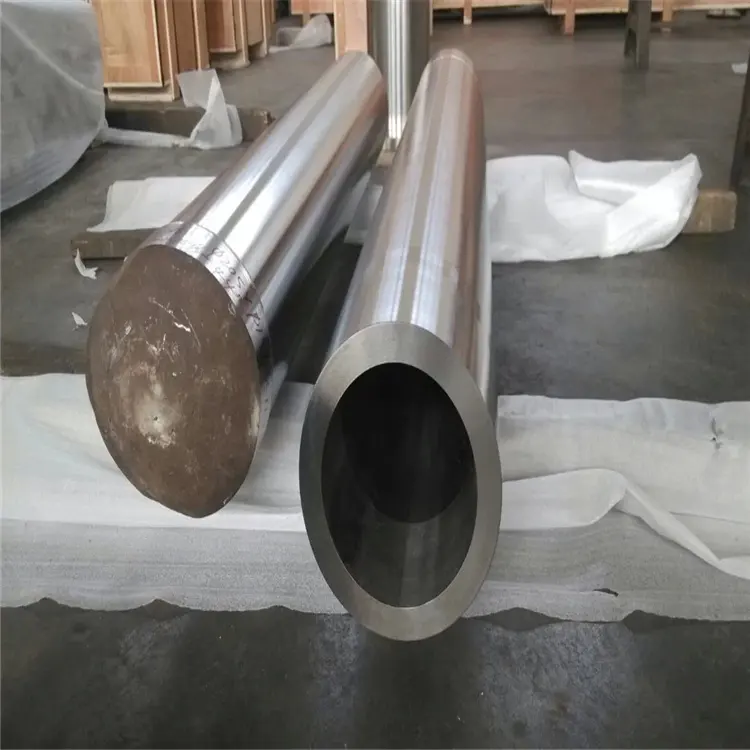
In today's fast-paced industrial landscape, the demand for materials with superior strength, durability, and flexibility has never been higher. Advanced techniques such as laser surface hardening, ion implantation, and cryogenic treatment have emerged as game-changers, allowing engineers to fine-tune mechanical properties like hardness and fatigue resistance with unprecedented precision. By leveraging these methods, industries from aerospace to automotive can develop components that withstand extreme conditions, leading to longer lifespans and reduced maintenance costs.
One of the most intriguing developments is additive manufacturing, which not only builds complex geometries but also enables microstructural control through techniques like selective laser melting. This allows for the creation of materials with tailored properties, such as gradient structures that combine high toughness on the inside with wear-resistant surfaces. Coupled with computational modeling, these approaches help predict performance outcomes, minimizing trial and error and accelerating innovation cycles in product design.
Beyond traditional methods, nanotechnology has opened new frontiers, with nanocomposites and surface coatings enhancing properties like corrosion resistance and tensile strength at atomic scales. These advancements are particularly vital in sectors like biomedical implants, where materials must balance mechanical robustness with biocompatibility. As research continues, the integration of smart materials and real-time monitoring systems promises even more dynamic ways to enhance mechanical attributes, pushing the boundaries of what's possible in engineering and manufacturing.
Improving Corrosion Resistance in Harsh Environments
Enhancing a material's ability to withstand corrosion in demanding settings often starts with a deep dive into its inherent properties and the specific challenges it faces. Harsh environments, like offshore rigs, chemical plants, or coastal infrastructure, expose materials to relentless factors such as salt spray, acidic pollutants, high humidity, or extreme temperatures. To combat this, strategies focus on modifying surface characteristics or introducing protective barriers that shield the base material from direct attack. This isn't just about adding a quick fix; it involves understanding how interactions at the molecular level can lead to degradation over time, prompting tailored solutions that extend service life and reduce maintenance costs.
One effective approach lies in alloy development, where elements like chromium, nickel, or molybdenum are incorporated into metals to form stable oxide layers that act as passive barriers against corrosive agents. For instance, stainless steels leverage chromium to create a thin, adherent chromium oxide film that self-repairs when damaged, offering robust protection even under fluctuating conditions. Similarly, coatings such as polyurethane epoxies or fluoropolymers provide versatile options, forming resilient, impermeable shields that can be customized for chemical resistance or UV stability. These methods not only preserve structural integrity but also allow for aesthetic finishes, blending durability with design flexibility in applications from marine vessels to industrial equipment.
Beyond traditional techniques, emerging innovations are pushing the boundaries of corrosion resistance. Advanced treatments like plasma electrolytic oxidation create hard, ceramic-like coatings on lightweight metals such as aluminum and magnesium, enhancing their suitability for aerospace and automotive uses where weight and strength are critical. Additionally, smart coatings that incorporate inhibitors or sensing capabilities can detect and respond to early signs of corrosion, offering proactive maintenance. By integrating these cutting-edge solutions, industries can achieve longer-lasting performance in even the most aggressive environments, ensuring reliability and safety while minimizing environmental impact through reduced material waste and energy consumption.
Cost-Effective Manufacturing Approaches for Durable Components
When we talk about making tough parts without breaking the bank, it's all about getting creative with how things are built. Instead of just sticking to old methods, factories are now mixing materials and designs to boost strength while cutting costs. For example, blending lightweight alloys with composites can lead to components that last longer in harsh conditions, all while keeping production expenses in check. It's a smart move that helps manufacturers stay competitive without sacrificing quality.
Another angle is streamlining the production process itself to save money on durable items. This might involve using advanced 3D printing techniques that reduce waste and allow for complex shapes that are both strong and cost-effective. By optimizing the manufacturing steps—like minimizing manual labor with automated systems—companies can produce robust parts faster and cheaper. This approach not only lowers upfront costs but also ensures components stand up to wear and tear over time, making it a win-win for both makers and users.
Lastly, thinking beyond the factory floor can lead to big savings on durable components. Collaborating with suppliers to source affordable, high-quality materials or implementing just-in-time inventory systems reduces storage costs and prevents overproduction. These strategies help keep the overall manufacturing budget lean while delivering parts that are built to last. It's about finding that sweet spot where durability meets affordability, making sure every dollar spent adds value to the final product.
Sustainability and Efficiency in Alloy Production
In the dynamic landscape of alloy production, sustainability is no longer an afterthought but a core driver of innovation, reshaping how we approach metal manufacturing. As industries face mounting pressure to reduce environmental footprints, the sector is embracing greener practices that balance resource conservation with operational efficacy. From optimizing energy consumption in smelting processes to implementing closed-loop systems that minimize waste, these efforts are transforming traditional methods into more resilient and eco-conscious operations. It's not just about compliance; it's about building a future where alloy production thrives without depleting the planet's finite resources.
Efficiency plays a pivotal role in this transformation, as it directly influences both economic viability and environmental impact. Advances in technology, such as predictive analytics and AI-driven process control, are enabling producers to fine-tune parameters for maximum yield with minimal input. Imagine a facility that adjusts its alloy composition in real-time based on raw material fluctuations, slashing energy use and emissions while maintaining product quality. This synergy between sustainability and efficiency isn't just a trend—it's a competitive edge that attracts forward-thinking clients and investors, setting progressive companies apart in a crowded market.
Beyond the technical aspects, a holistic view of sustainability in alloy production considers social and economic dimensions, too. By fostering local partnerships and investing in community initiatives, producers can enhance their overall efficiency through stronger supply chains and improved stakeholder trust. This integrated approach ensures that advancements in alloy technology contribute not only to cleaner processes but also to broader societal benefits, creating a ripple effect that elevates the entire industry toward a more sustainable and efficient horizon.
Real-World Applications and Performance Validation
In numerous industries, real-world applications of AI-driven technologies extend beyond mere theory, demonstrating measurable impact on efficiency and outcomes. For instance, in healthcare, predictive algorithms assist doctors in diagnosing diseases like cancer earlier, leveraging patient data to identify subtle patterns that might be missed by human eyes. These tools are validated through clinical trials and ongoing patient monitoring, where performance metrics such as accuracy rates and false positives are rigorously tracked. This validation process ensures that the technology not only works in controlled environments but also adapts to diverse real-world scenarios, enhancing trust and adoption among medical professionals.
Beyond healthcare, autonomous vehicles showcase another critical application, where performance validation is paramount for safety and reliability. Companies implement extensive testing in varied driving conditions, from busy city streets to harsh weather, to gather data on how systems handle unexpected obstacles or complex traffic patterns. This real-world feedback loop allows for continuous improvements in algorithms, reducing error margins and building public confidence. The validation results often translate into tangible benefits, such as reduced accident rates and smoother traffic flow, underscoring the importance of thorough, iterative testing in deployment.
In business sectors like finance, AI models for fraud detection undergo rigorous performance validation by analyzing historical transaction data to spot anomalies in real time. By comparing predictions against actual fraud cases, organizations can fine-tune their systems to minimize false alarms while catching more sophisticated schemes. This process not only validates the model's effectiveness but also highlights its adaptability to evolving threats, ensuring it remains robust in a dynamic landscape. Ultimately, such applications prove that solid validation is key to transforming innovative concepts into reliable, everyday tools that people can depend on.
FAQ
Inconel alloys stand out due to their exceptional resistance to oxidation and corrosion at extreme temperatures, along with maintaining high strength under stress, making them ideal for aerospace and chemical processing applications.
Techniques like additive manufacturing and hot isostatic pressing enhance material properties by refining microstructure, reducing defects, and enabling complex geometries that boost durability and efficiency in harsh environments.
Machining Inconel is difficult due to its high strength and tendency to work-harden, often requiring specialized tools and cooling methods to prevent tool wear and maintain dimensional accuracy.
Yes, additive manufacturing, such as laser powder bed fusion, allows for precise control over Inconel's microstructure, producing lightweight, durable parts with reduced material waste compared to traditional methods.
Heat treatment processes, like solution annealing and aging, optimize the alloy's grain structure and precipitate distribution, significantly improving its creep resistance and fatigue life in high-temperature applications.
While initial setup costs may be higher, methods like powder metallurgy and near-net shape forming reduce material waste and machining time, often leading to long-term savings and improved performance in critical applications.
Examples include turbine blades in jet engines, exhaust systems in automotive and aerospace, and chemical reactors, where enhanced durability and performance translate to longer service life and reduced maintenance.
Advanced techniques enable intricate designs with internal cooling channels and optimized shapes, previously impossible with conventional methods, allowing for tailored solutions that maximize thermal and mechanical efficiency.
Conclusion
Advanced manufacturing techniques for Inconel alloys are revolutionizing industrial applications by significantly enhancing both performance and durability. Innovative processing methods, such as additive manufacturing and precision forging, enable the creation of complex components with superior mechanical properties, including increased strength and fatigue resistance. These approaches also boost corrosion resistance in harsh environments, ensuring reliability in extreme conditions like aerospace and chemical processing. By integrating cost-effective manufacturing strategies, industries can produce durable components more efficiently, reducing waste and improving material utilization. This synergy between advanced techniques and practical implementation not only elevates product longevity but also supports the growing demand for high-performance materials in critical sectors.
Sustainability and efficiency are central to modern alloy production, with techniques like powder metallurgy and laser cladding minimizing environmental impact while optimizing resource use. Real-world applications, such as turbine blades and heat exchangers, validate these advancements through rigorous performance testing, demonstrating tangible benefits in operational settings. By focusing on both technological innovation and practical validation, these methods ensure that Inconel alloys meet evolving industrial standards, delivering enhanced durability without compromising on cost or sustainability. This holistic approach positions advanced manufacturing as a key driver in pushing the boundaries of material science, fostering resilience and longevity in demanding applications.
Contact Us
Contact Person: Zoe Liang
Email: [email protected]
Tel/WhatsApp: 86 189 2128 6299
Website: https://www.baowuchina.com