
China Filling Machine Solutions: What to Consider Before You Buy
2026-10-19
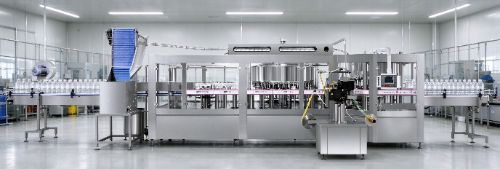
Price tags dominate most conversations about Chinese filling machines, but the real costs show up later if you skip the essentials—accuracy tolerances, compatibility with your container, and the availability of spare parts. Before you request a single quote, take ten minutes to understand the factors that separate a smooth installation from a costly one. Wanying Machinery offers a closer look at what actually matters.
Matching the Machine to Your Product—Not the Other Way Around
The first impulse in many plants is to pick a machine that looks impressive on the spec sheet, then quietly push product formulations or package sizes until they fit. That approach creates unnecessary friction on the line. A far better path starts with a plain description of the product as it actually behaves: its viscosity at filling temperature, the size distribution of any particulates, how sensitive it is to shear, and what range of container dimensions you will realistically run. Those specifics—not a generic machine category—should drive choices like pump type, nozzle design, and frame clearance.
Matching also means thinking about tomorrow without letting “what if” fantasies inflate the budget. A modular filler with quick-change parts may be the right call if you run three jar sizes today and expect two more next year. But if your product line is stable and volumes are high, a dedicated machine tuned to one format will outperform a flexible machine every time. The point is to let the product’s current and near-future requirements set the boundaries, then buy the simplest machine that stays inside them.
Throughput Claims vs. Real-World Speed
The numbers printed on the box rarely survive contact with your living room. A router advertised as "AX3000" doesn't mean you'll get 3,000 Mbps on your phone. That figure combines maximum theoretical speeds across two separate bands—2.4 GHz and 5 GHz—while most devices can only use one band at a time. Even under perfect lab conditions, a single client typically sees a fraction of that aggregate number.
Real-world speed drops further due to overhead from encryption, error correction, and the constant chatter of management frames. Walls, neighboring Wi-Fi networks, and older client devices all force the router to fall back to slower, more robust modulation schemes. The gap between claimed throughput and actual file transfer speed can easily exceed 50% in a typical apartment.
Instead of trusting the big number, look at the fine print for per-stream data rates or independent test results. A mid-range router with a strong 5 GHz radio often outperforms a higher-priced "tri-band" model in everyday use, simply because fewer bands mean less interference and cleaner signal paths. Focus on what your own devices can actually negotiate, not the marketing headline.
Food-Grade Materials Aren't Optional
When it comes to food storage, the choice of materials is not a matter of preference but of safety. Food-grade materials are specifically designed and tested to ensure that no harmful chemicals leach into your food, even under varying temperatures or prolonged contact. Using non-food-grade plastics or metals can introduce contaminants like BPA, phthalates, or heavy metals, which pose serious health risks over time. The label 'food-grade' isn't a marketing gimmick—it's a regulatory standard that separates safe containers from potential hazards.
Many people assume that any clean container is fine for storing leftovers or bulk ingredients, but that assumption overlooks how materials interact with food. For instance, a plastic bin meant for office supplies may release volatile organic compounds when exposed to acidic foods like tomato sauce or citrus. Similarly, certain metals not intended for food contact can corrode and alter the taste or safety of what you eat. Choosing food-grade materials means you're not gambling with your health every time you store, freeze, or reheat a meal.
In a market flooded with cheap storage options, opting for certified food-grade containers is a small investment with long-term payoffs. These materials are rigorously tested for migration limits, durability under stress, and resistance to bacterial growth. Whether it's glass, stainless steel, or BPA-free plastic, the certification ensures that the container won't compromise your food's integrity. Settling for anything less isn't just a compromise on quality—it's a risk you don't need to take when safe alternatives are readily available.
When Standard Models Fall Short—Customization Realities
Standard models are built for the middle of the bell curve, but real-world operations rarely stay there. Edge cases pile up: a niche industry term, an unusual data format, a workflow that treats exceptions as the rule. When a model trained on broad data meets these situations, it tends to flatten them into something familiar — which is exactly when outputs start to look confidently wrong.
Customization, then, is less about fine-tuning for the sake of it and more about closing the gap between what a model assumes and what a team actually sees every day. The reality is messier than the benchmarks suggest. It means revisiting how data gets labeled, questioning which examples deserve more weight, and accepting that a "good enough" general model can still fail a specific task in ways that matter.
What often gets overlooked is that customization isn't a one-time fix. It's a continuous back-and-forth — as the operating environment shifts, the customized model needs to follow. That's the part that feels less like machine learning and more like maintenance work on a living system.
After the Sale—Support, Spare Parts, and Downtime
Real support begins the moment a machine leaves the loading dock, not when it fails. A vendor who treats after-sales as an afterthought forces you to manage every hiccup alone. That is why the best partners assign a dedicated engineer, maintain a local inventory of critical spares, and answer the phone on the first ring—because a pump that sits idle for three days is not a minor inconvenience, it is a leak in your cash flow.
Spare parts availability often separates a nuisance from a crisis. Relying on a distant warehouse or a generic distributor means a simple seal replacement turns into a week-long saga. Smart operators ask for a breakdown of commonly replaced items—bearings, seals, filters, drive belts—and confirm they are stocked within a reasonable radius. If the answer is vague, assume the downtime will be yours to own.
Downtime carries a price tag that rarely appears on an invoice. Every unplanned hour of stoppage ripples through production schedules, labour costs, and customer commitments. Choosing a supplier based solely on purchase price ignores the thousands lost while waiting for a courier. The real benchmark is mean time to recovery: how quickly can the equipment be diagnosed, parts delivered, and a technician on site?
The Full Price Tag—Freight, Installation, and Hidden Costs
When you see a price on a machine or a major piece of equipment, that number is rarely the final amount you will pay. Freight alone can add hundreds or even thousands of dollars, depending on weight, distance, and whether the carrier offers liftgate service or inside delivery. Many suppliers quote the item cost first and then add shipping as a separate line item only at checkout, so you may not notice the true cost until you are already committed.
Installation is another major expense that gets overlooked. A commercial oven might need a gas line run, a dedicated circuit installed, or ventilation work that requires a licensed contractor. Even something as simple as a large printer or CNC router may need professional rigging, leveling, and calibration. If you are replacing an old unit, disposal fees for the old equipment can also appear, along with permits or inspection fees that local codes demand.
A practical way to avoid these surprises is to ask for a door to door quote before you order. That means a single number that includes freight, liftgate service, inside placement, full installation, removal of packaging, and any required hookups or permits. If a seller hesitates to give you that all-in figure, treat the listed price as just a starting point. The real price tag is the one that appears after the equipment is running in your space, not the one in the catalog.
FAQ
Chinese suppliers typically offer piston, gravity, pump, net weight, and vacuum fillers. The choice hinges on your product's viscosity, particle content, foaming tendency, required accuracy, and output speed. For thick pastes or sauces, a piston or progressive cavity pump works well. Thin, free-flowing liquids often suit gravity or overflow fillers. If your product contains chunks, you'll need a filler with special valves and a wide nozzle. Container shape and size also matter, so avoid picking a machine before testing with your actual bottles.
Ask the supplier for material certificates for all product-contact parts—316L stainless steel is typical for food or pharma applications. Inquire about the frame construction and whether it's fully welded or bolted. Request a live video tour of the workshop, not just pre-recorded clips. If possible, watch the machine running at full speed and listen for unusual vibration. A reputable factory will also share certifications like CE or ISO, but don't rely on paperwork alone; ask for close-up photos of welds, electrical panels, and brand-name components.
Clarify the warranty period, which is usually 12 to 24 months for major components. Ask about remote troubleshooting via video call, and check if they offer on-site installation and commissioning for an extra fee. Make sure the contract includes a spare parts list with delivery lead times—common wear items like seals and O-rings should be easy to source later. Also request operation manuals in English and training videos. If the supplier has local service partners in your country, that's a big plus.
Yes, most Chinese manufacturers accept customizations such as multi-head filling, anti-drip nozzles, CIP cleaning systems, or special hopper sizes. However, custom work extends the schedule. A standard machine might ship in 2–4 weeks, while a heavily customized one can take 6–10 weeks or more. Confirm the design freeze date and any charges for late changes. Always get a detailed technical drawing approved before production starts.
Look beyond the invoice. Consider energy consumption, the frequency and cost of replacing wear parts, expected downtime for maintenance, and operator training time. A cheap filler with poor accuracy may waste product or require rework, eating into your margins. Ask the supplier for a list of consumable parts with prices and typical replacement intervals. Also factor in compatibility with your existing packaging materials—if the machine needs special bottles, that adds hidden costs.
Focus on the production floor: is it organized, or chaotic? Check whether they have their own machining equipment or simply assemble parts from elsewhere. Ask about their quality control process—do they test each machine before shipping? Look at welding quality, electrical wiring neatness, and the brands of PLCs, sensors, and motors. Request a demonstration using a product similar to yours, and ask for references from customers in your industry.
Absolutely. Most serious suppliers offer sample testing, either free or for a small fee. Send them your product, containers, and caps, and ask for a video recording of the trial. Pay attention to fill accuracy, dripping, foaming, and how well the nozzle fits your bottle opening. If your budget allows, visiting the factory in person for a live trial is even better, as you can observe adjustments and clean-up procedures firsthand.
Conclusion
Start by looking at your product, not the catalog. A machine that handles thin juices beautifully may choke on chunky salsa or a viscous paste, and retrofitting nozzles or pumps later is rarely as simple as the sales sheet suggests. The same caution applies to speed. Nominal throughput figures usually come from ideal conditions—a uniform liquid, a perfect bottle shape, no changeovers—so ask for video of a similar product running at the pace you actually need. When food or pharmaceuticals are involved, material choices stop being a preference. Stainless steel contact parts, food-grade seals, and surfaces that can be cleaned without trapping residue are non-negotiable, and a low price means little if you have to replace corroded fittings in six months.
Standard frames and fill heads work for many lines, but if your container has an unusual neck, your fill volume is tiny, or you need to switch between products several times a day, be ready for real engineering work. Custom changes often mean longer lead times and different testing, so pin down exactly what 'semi-custom' includes before paying. Then look past the initial invoice. Freight, voltage conversion, installation, and training can add more than expected, and some suppliers quote only the machine itself. You also need to know how quickly spare parts ship, whether remote troubleshooting is available, and what downtime really costs you while you wait. A filling line from a Chinese manufacturer is not just a purchase; it is a relationship with a factory on the other side of the world, and the terms of that relationship determine whether the machine stays productive or becomes a very expensive lesson.
Contact Us
Contact Person: Tyson
Email: [email protected]
Tel/WhatsApp: +8613396971296
Website: https://www.wanyingmachinery.com