
Custom Rotary Engraving Material Factory Delivers Premium Blanks for Precision Projects
2026-10-16
Precision rotary engraving demands blanks that hold every fine line and curve without compromise. At LYSHIRE, we craft custom engraving materials in our own factory, where tight tolerances and clean surfaces are the standard—not the exception. Whether you're cutting intricate nameplates, control panels, or one-off artistic pieces, the right substrate can mean the difference between a crisp result and a costly redo. Here's what our premium blanks bring to your next project.
Materials That Won't Chip or Melt Under the Bit
The real test of a cutting tool isn't how sharp it starts—it's how long it stays that way when the friction kicks in. Most materials fail quietly at first, shedding microscopic grains that dull the edge before you even notice the heat discoloring the surface. But a handful of alloys and ceramics refuse to play that game. They shrug off the thermal cycling that turns cheaper steels into butter, and they hold their crystalline structure even when the bit is screaming through at full speed.
Carbide blends, particularly those with a fine tungsten grain and a cobalt binder tuned for toughness rather than raw hardness, have become the quiet workhorses in machine shops. They don't chip because the grains absorb impact by micro-fracturing just enough to spread the load, while the binder keeps everything locked together. On the molten end of the spectrum, polycrystalline diamond compacts and cubic boron nitride laugh at temperatures that would have a high-speed steel bit glowing cherry red and losing its temper—literally. The trick is matching the material's thermal conductivity to the job: too conductive and the heat bleeds back into the tool body, too insulating and the cutting point becomes a tiny forge.
Then there are the oddballs—silicon nitride ceramics that slide through cast iron like it's chalk, or cermets that blend ceramic hardness with a metallic backbone. What they share is a refusal to soften, chip, or weld themselves to the workpiece under pressure. If you're tired of resharpening halfway through a run, look past the generic 'premium steel' labels and ask what the bit is actually made of. The answer usually involves a periodic table's worth of tungsten, titanium, and carbon, arranged in ways that don't give up when the going gets hot.
Custom Dimensions, No Minimum Order Headaches
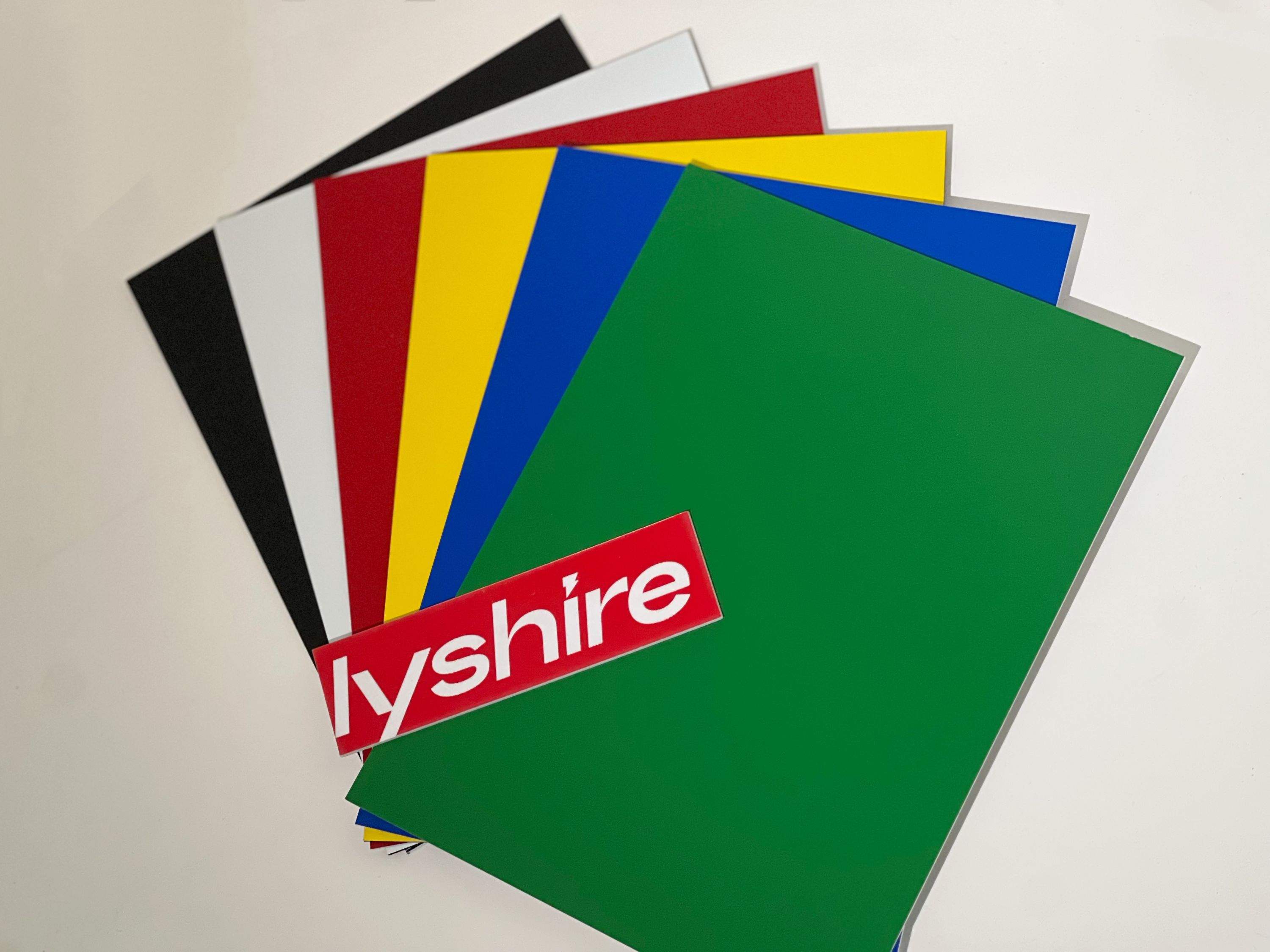
Every order starts with a blank dimension field, not a drop-down menu. You give us the width, length, and depth that match your project—down to the millimeter if needed—and we'll produce exactly that. No rounding up to “close enough,” no requests to adjust your design to fit our tooling.
Because there's no minimum order quantity, you're free to test a handful of pieces before committing to a full production run. Custom sizing and small batches shouldn't be a special request; they're just how we work. Whether you need a single replacement part or a short run of odd-sized components, the pricing stays straightforward and the lead time stays predictable.
You end up with components that drop straight into your assembly—no sawing, filing, or stacking shims to compensate for a stock size that was never quite right.
Why Surface Finish Decides Engraving Quality
A rough or uneven surface scatters light unpredictably, making engraved lines look fuzzy or shallow even when cut depth is consistent. Polished surfaces, by contrast, offer a stable background that lets each stroke read crisply, with high contrast between the cut area and the untouched material.
The finish also dictates tool wear and chip evacuation. On a surface with microscopic peaks and valleys, a fine engraving bit can deflect or skip, leaving irregular edges. A uniformly prepared surface reduces vibration and gives the tool a predictable path, so fine details hold up without post-processing.
The Factory Checks Most Suppliers Skip
Walking the production floor at most factories, you'll notice a familiar rhythm: machines calibrated, workers trained, raw materials stamped and stacked. The checklist routine covers dimensions, torque, visual defects. But peel back the standard audit sheets and there's a quieter layer most inspectors never touch—the way a part behaves after it leaves the line, not just before it ships.
One check that gets skipped constantly is the "tolerance drift under real load" test. Suppliers measure components in isolation, on granite slabs, at room temperature. Yet the same bracket bolted into a hot engine bay or a humid warehouse corner can shift by fractions that stack into failure. Few factories have a rig that simulates that environment—or even ask whether one exists.
Another blind spot is the "wear signature" test: running a batch of parts through 10,000 cycles and mapping not just average wear but the outliers. Most check sheets stop at a pass/fail after 500 cycles. The useful data—where the coating thins first, which batch of raw stock underperforms—sits untouched. Ask your supplier for the deviation curve, not the certificate. That's the check that separates a vendor from a partner.
Precision Projects That Deserve Better Blanks
There’s a particular kind of disappointment that hits when you’ve spent hours dialing in a mortise-and-tenon joint, only to watch a supposedly kiln-dried blank cup the moment it leaves the jointer. Precision work doesn’t forgive sloppy stock. Blanks with uneven moisture, hidden tension, or fuzzy grain tearout force you to compromise your tolerances before the first real cut. Better blanks aren’t just about aesthetics—they’re about predictability, so your layout lines stay honest and your final passes mean something.
If you’re building anything where a half-millimeter gap matters, the raw material should arrive already stress-relieved and dimensionally stable. That means blanks cut from straight-grained sections, not the twisted offcuts no one else wanted. It also means suppliers actually sorting by density and moisture content rather than promising “kiln dried” as a marketing line. The best blanks I’ve used felt almost boring—no surprise warps, no resin pockets, no hidden checks. They let the project, not the wood, be the challenge.
Precision projects rarely tolerate “good enough” blanks. When your joinery relies on tight shoulders and your finish demands uniform absorption, a subpar blank forces extra milling, shimming, or worst of all, starting over. Paying more for properly cured and graded stock isn’t an upgrade; it’s the baseline for work that’s supposed to fit. If the blank can’t hold a clean edge or stay flat past the rough-out stage, no amount of skill with a chisel will rescue it.
Questions That Reveal a Supplier's True Precision
When you're vetting a supplier, surface-level promises about tight tolerances and repeatability rarely hold up under real production conditions. The telling details emerge when you ask about process capability indices for specific features, how they handle tool wear compensation mid-batch, or what their rejection rate has been over the last twelve months on parts with similar geometry. A supplier who can articulate their Cpk values for the exact tolerances you're quoting—and explain the last time those numbers drifted—is operating with a different level of rigor than one who simply says "we hold ±0.005 mm."
Precision also shows up in how they talk about measurement. Ask what gauge R&R studies look like for their in-house inspection equipment, or whether they can share raw data from a recent first article inspection. Watch for hesitation when you bring up environmental factors: temperature swings in the shop, vibration from nearby machinery, or even the cleanliness of their metrology lab. A supplier who volunteers these constraints, rather than waiting for you to discover them, has already thought through the variables that quietly erode accuracy.
Finally, probe their approach to edge cases. What happens when a feature is close to the limit but still technically in spec? Do they ship it and hope, or flag the trend and ask? The answer reveals whether precision is a documented, enforced practice or just a marketing phrase. Suppliers with true precision cultures tend to show you their outlier data, not hide it.
FAQ
We stock cast acrylic, aluminum, brass, copper, and stainless steel blanks. Thicknesses run from 0.5 mm to 6 mm, and we can source specialty laminates for two-color engraving if the job calls for it.
Each blank is cut on calibrated CNC equipment and checked against a master fixture. We hold length and width to ±0.1 mm and thickness to ±0.05 mm on most materials, with a full batch inspection before packing.
Yes. Send a CAD file or a simple sketch with dimensions, and we will adjust the cutting path. There is no minimum order for stock sheet materials, though custom extrusions may require a tooling deposit.
Brushed, mirror-polished, matte bead-blast, and anodized finishes are available. We can also apply a clear protective film to keep the face scratch-free during handling and engraving.
Samples usually ship within 7 to 10 business days. Production runs take 15 to 20 business days depending on material availability and secondary finishing like anodizing or laser film masking.
Yes. The blanks are flat, deburred, and sized to fit common rotary engraving tables. The same materials also work well with CO2 and fiber lasers, though we recommend a quick test on offcuts if you plan to switch processes.
After cutting, every piece goes through deburring and a flatness check on a granite surface plate. We visually inspect edges under magnification and reject anything with chipping, rollover, or visible burrs.
Conclusion
Rotary engraving demands blanks that hold up when the cutter hits them, and that's exactly where this factory draws the line. Their material formulations resist chipping at the edges and won't soften or gum up as heat builds, which means fewer ruined passes and cleaner detail work. At the same time, they'll cut to whatever width, length, or thickness a job calls for, without forcing you into bulk quantities you don't need. A smooth, consistent surface gets overlooked until it causes uneven depth or ragged lettering, so they put extra attention on finishing, not just dimension.
The checks that matter most often happen before a blank ever reaches your machine, and this factory performs the kind of incoming and in-process inspections many suppliers skip: hardness consistency, flatness across the sheet, and edge integrity. For precision projects like instrument panels, nameplates, or fine awards, subpar stock shows up immediately. Asking a supplier how they verify flatness, what tolerances they actually hold, and whether they test under rotary speeds will tell you more than a glossy catalog. Those questions separate a supplier who understands engraving from one who simply sells plastic.
Contact Us
Contact Person: Tina Hou
Email: [email protected]
Tel/WhatsApp: +86 17816238685
Website: https://www.lyshire.com