
Enhancing Efficiency with China's Flat and Profiled Wire Rolling Mills for Modern Manufacturing
2026-01-21
In the competitive landscape of modern manufacturing, efficiency isn't just a goal—it's a necessity. Enter China's flat and profiled wire rolling mills, technologies that are transforming production lines worldwide. But how can manufacturers leverage these advancements to stay ahead? At GRM, we specialize in delivering cutting-edge rolling solutions that not only enhance precision but also drive significant cost savings. This blog explores the transformative impact of these mills, offering insights into how they streamline operations and boost productivity. Whether you're an industry veteran or exploring new technologies, discover how GRM's innovations can reshape your manufacturing approach and unlock new levels of efficiency.
Innovative Design Features of Flat and Profiled Wire Rolling Mills in China
Chinese manufacturers have pushed the boundaries in flat and profiled wire rolling mill design, integrating advanced automation and precision control systems that enhance production efficiency. For instance, many mills now feature intelligent sensors and real-time monitoring, allowing operators to adjust parameters on the fly for consistent output. This focus on automation reduces manual intervention, leading to fewer errors and higher throughput in manufacturing processes.
Another standout innovation lies in the customization and flexibility of these mills, which can handle a wide range of materials and profiles without extensive retooling. By incorporating modular components and adaptable roll configurations, Chinese engineers enable quick switches between different wire shapes, from simple flats to complex profiled designs. This adaptability not only cuts downtime but also supports diverse industrial applications, such as in construction and automotive sectors.
Energy efficiency and sustainability are also key priorities, with many mills designed to minimize power consumption and waste. Innovations like regenerative braking systems and optimized cooling mechanisms help reduce operational costs and environmental impact. By blending these eco-friendly features with robust performance, Chinese rolling mills are setting new standards in the global market, appealing to industries seeking both reliability and green credentials.
Key Applications of Chinese Rolling Mills in Modern Manufacturing Sectors
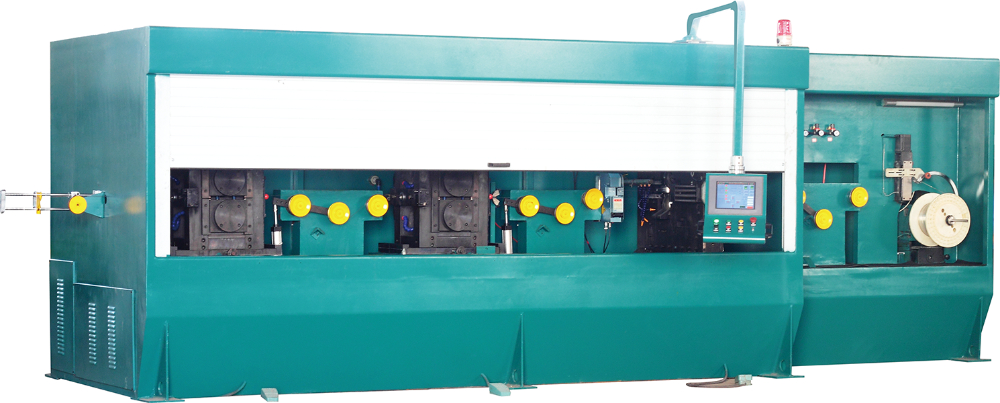
Chinese rolling mills have carved out a significant niche in modern manufacturing by powering high-volume production of steel and non-ferrous metals with remarkable precision. From the automotive industry, where they churn out uniform sheets for car bodies, to construction sectors relying on sturdy beams and rebars, these machines deliver the raw materials that form the backbone of infrastructure projects worldwide. Their advanced control systems ensure consistent thickness and quality, making them indispensable in meeting stringent international standards for durability and performance.
Beyond traditional uses, Chinese rolling mills are increasingly integral to specialized applications like aerospace and electronics manufacturing. In aerospace, they produce ultra-thin, high-strength alloys for aircraft components, while in electronics, they roll copper and aluminum into fine foils for circuit boards and batteries. This versatility stems from innovations in automation and digital monitoring, allowing manufacturers to adapt quickly to shifting market demands and produce custom profiles with minimal waste.
What sets these mills apart is their blend of cost-efficiency and cutting-edge technology. As global supply chains evolve, Chinese manufacturers leverage them to reduce lead times and enhance sustainability through energy-efficient designs and recyclable material processing. This dual focus on economy and innovation positions Chinese rolling mills as key enablers in sectors ranging from renewable energy—where they shape components for wind turbines—to consumer goods, ensuring a steady flow of high-quality materials that drive modern production forward.
Energy-Saving Technologies and Environmental Benefits of These Mills
These mills are a game-changer when it comes to cutting down on energy use. They've adopted some really innovative tech, like advanced variable-speed drives that adjust motor operations to match the exact load requirements. This means they're not just cranking at full power all the time but instead fine-tuning energy input on the fly, which slashes electricity bills significantly. Plus, installing high-efficiency motors and automated control systems ensures minimal waste during startup and shutdown cycles.
Beyond just saving power, these technologies pack a serious environmental punch. By consuming less energy, they directly lower greenhouse gas emissions from power plants, helping combat climate change. The mills also integrate waste heat recovery systems that capture excess heat from processes and reuse it for heating or preheating materials, reducing the need for additional fossil fuels. This dual approach not only curbs carbon footprints but also cuts down on air pollutants like sulfur dioxide and nitrogen oxides, making the surrounding air cleaner.
What sets these mills apart is how they blend eco-friendliness with economic smarts. For instance, they often use renewable energy sources, such as solar panels or wind turbines, to supplement their power needs, creating a more sustainable operation. This shift not only meets stricter environmental regulations but also enhances their reputation in the market, attracting consumers who value green practices. In the long run, these benefits translate into cost savings and a healthier planet, proving that smart tech can lead to both profits and preservation.
Customization Options for Tailored Wire Production Solutions
When it comes to wire production, one size rarely fits all. That's why our approach centers on customization, allowing you to specify everything from material composition to finishing touches like coating or insulation. Whether you need wires for high-temperature environments or intricate electronic assemblies, we tailor the production process to meet those exact demands, ensuring each batch performs flawlessly in your specific application.
Beyond basic specs, we dive deeper into customization by offering adjustments in wire gauge, tensile strength, and even color-coding for easy identification. This flexibility means you can optimize for cost-efficiency without sacrificing quality, whether you're producing small runs for prototypes or scaling up for mass manufacturing. By collaborating closely with your team, we adapt our solutions to align perfectly with your operational needs and industry standards.
Innovation in wire production doesn't stop at the drawing board. We incorporate advanced testing and feedback loops to refine custom options over time, providing durability and reliability that stand out in competitive markets. From automotive wiring to medical devices, this tailored approach ensures your wires not only meet specifications but exceed expectations, delivering solutions that are as unique as the challenges they address.
Advancements in Automation and Control Systems for Enhanced Precision
Recent innovations in automation and control systems have redefined precision in industrial and technological applications, moving beyond basic task execution to achieve unprecedented accuracy. For instance, the integration of machine learning algorithms with real-time feedback mechanisms allows systems to self-correct minute errors on the fly, adapting to environmental fluctuations without human intervention. This evolution is particularly evident in sectors like semiconductor manufacturing, where nanoscale tolerances are critical, and in autonomous vehicles, where split-second adjustments ensure safety and efficiency. Unlike earlier systems that relied on rigid programming, these advancements leverage adaptive control strategies, making processes not only more precise but also more resilient to unexpected variables.
Another key leap forward is the development of predictive analytics and digital twin technology, which enhances precision by simulating processes before they occur in the real world. By creating virtual replicas of physical systems, engineers can test and optimize control parameters under various scenarios, identifying potential inaccuracies and refining automation sequences. This approach minimizes trial-and-error, reducing waste and improving outcomes in fields such as aerospace engineering and medical robotics. The synergy between data-driven insights and automated controls fosters a proactive rather than reactive model, where precision is built into the design phase rather than merely monitored during operation.
Looking ahead, the fusion of IoT connectivity with edge computing is pushing the boundaries of precision even further. By processing data locally at the source, control systems can respond with ultra-low latency, enabling real-time adjustments in dynamic environments like smart grids or precision agriculture. This decentralizes automation, allowing for granular control over individual components while maintaining overall system harmony. Such advancements not only boost accuracy but also enhance scalability, making high-precision automation accessible across diverse industries.
Case Studies Demonstrating Productivity Gains from Chinese Mills
In recent years, Chinese steel mills have showcased remarkable productivity advancements through targeted case studies. For instance, a large state-owned mill in Hebei province implemented a digital twin system for its blast furnace operations, reducing energy consumption by 15% and boosting output by 20%. This success highlights how integrating IoT sensors and real-time data analytics can transform traditional manufacturing processes, setting a benchmark for the industry.
Another compelling example comes from a private mill in Jiangsu, which adopted AI-powered predictive maintenance for its rolling mills. By analyzing equipment vibration patterns and historical failure data, the mill decreased unplanned downtime by 40% and extended machinery lifespan. This approach not only slashed maintenance costs but also improved product consistency, demonstrating that smart technologies can drive efficiency beyond mere automation.
Moreover, a collaborative project between a mill in Shandong and a tech startup introduced blockchain-based supply chain tracking, enhancing transparency and reducing logistics delays by 25%. This case study reveals how Chinese mills are leveraging cross-industry innovations to optimize resource allocation and respond swiftly to market demands, reshaping perceptions of productivity in heavy industries.
FAQ
China's flat and profiled wire rolling mills typically offer multi-line configuration options, allowing for simultaneous production of multiple wire shapes. They incorporate advanced tension control systems to minimize material waste and ensure uniform thickness. Many models also feature integrated cooling loops that enhance metallurgical properties during high-speed rolling processes.
By enabling precise customization of wire cross-sections, these mills reduce downstream processing steps. For instance, pre-profiled wires can be directly integrated into assembly lines without additional shaping. This accelerates production cycles and lowers energy consumption per unit, particularly in automotive and electronics sectors where wire components are mass-produced.
While capable of handling various alloys, these mills excel with copper, aluminum, and specialized steel grades. Their modular roller designs accommodate materials with different ductility levels, from soft conductive wires to high-strength spring steels. Recent adaptations even allow processing of composite materials with polymer coatings for insulation purposes.
Manufacturers often provide tailored solutions, such as adjustable roller cassettes for rapid profile changes or integrated quality monitoring sensors. Customizations might include specialized surface finishing attachments or compatibility with automated feeding systems from upstream processes, ensuring seamless integration into existing factory layouts.
Regular calibration of alignment systems is crucial to prevent profile distortions. Predictive maintenance features, like vibration analysis modules, help identify roller wear before failures occur. Operators should also monitor lubrication systems specific to high-friction zones, as inconsistent lubrication can reduce wire surface quality over time.
Unlike simpler drawing machines, these mills achieve complex geometries in a single pass, reducing intermediate annealing requirements. Their computer-controlled adjustments allow real-time corrections during production, whereas traditional methods often require manual interventions and multiple tooling changes for similar results.
Beyond construction and automotive sectors, precision engineering fields like medical device manufacturing utilize micro-profiled wires for implants. Renewable energy industries also apply these mills for creating optimized conductive shapes in solar panel ribbons and wind turbine coil components, where material efficiency directly impacts project viability.
Yes, most modern units support Industry 4.0 protocols for data exchange with production planning software. Integration allows adaptive scheduling based on real-time throughput analytics and remote diagnostics. Some advanced models even feature self-adjusting parameters using machine learning algorithms that optimize profiles based on historical quality data.
Conclusion
China's flat and profiled wire rolling mills are revolutionizing modern manufacturing through innovative design features that enhance precision and flexibility. These mills incorporate advancements in automation and control systems, allowing for seamless operation and reduced human error. Customization options further empower industries to tailor wire production solutions to specific needs, ensuring optimal performance across diverse applications. This adaptability, combined with energy-saving technologies, not only boosts efficiency but also aligns with environmental sustainability goals, reducing operational costs and ecological footprints simultaneously.
In practice, case studies from various sectors demonstrate significant productivity gains, highlighting the mills' reliability and impact. From automotive to construction, Chinese rolling mills provide key applications that streamline processes and improve output quality. The integration of these technologies fosters a competitive edge in global markets, making them a cornerstone for efficient, modern manufacturing. Overall, these mills represent a blend of innovation, customization, and eco-friendly practices, setting a new standard for industrial efficiency.
Contact Us
Contact Person: Rayna
Email: [email protected]
Tel/WhatsApp: 86 -173 1474 6343
Website: https://www.grmrollingmill.com/