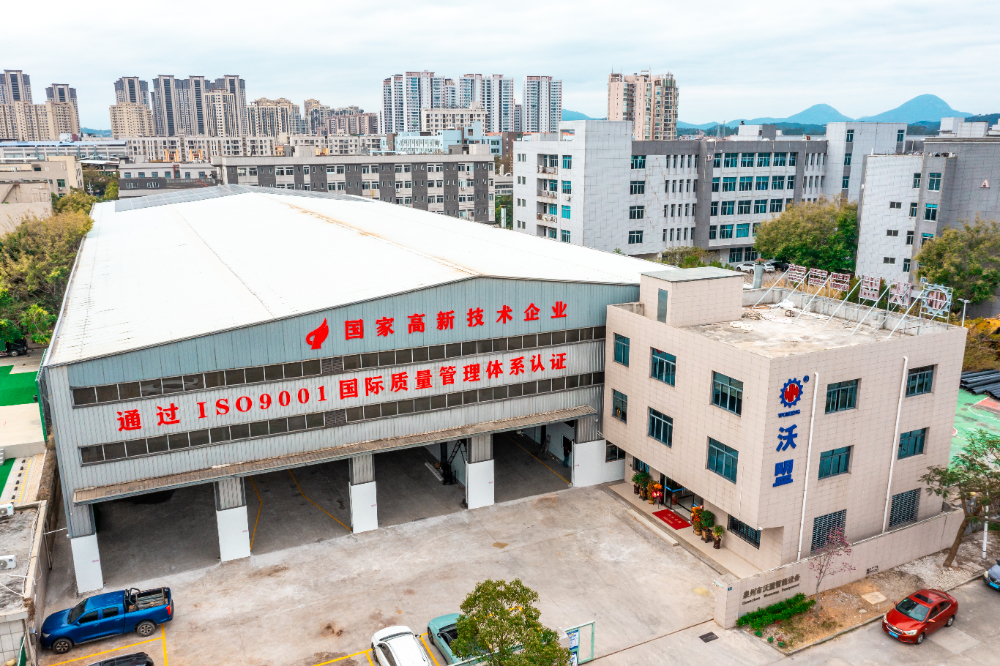
Full Servo Sanitary Pad Machinery Transforms Modern Production Efficiency
2026-08-20
If you've ever watched a cam-driven sanitary pad line lurch through a product changeover, you know exactly where the bottleneck lives—and it's costing you more than time. Full servo technology changes that equation entirely. Womeng has taken the concept further, building Full Servo Sanitary Pad Machinery where independent motors replace mechanical cams, so every station adjusts in sync without a single manual tweak. The payoff? Faster startups, less waste, and a consistency that makes your output predictable enough to sell on spec. But the real story is what happens when these machines hit the floor day after day.
From Cam Timers to Full Servo: Why Sanitary Pad Lines Finally Got Faster
For decades, sanitary pad lines leaned on cam timers and mechanical linkages to sequence cutting, folding, and sealing stations. The problem wasn't precision as much as inflexibility: every size change or material tweak meant physically swapping cams, re-timing shafts, and accepting that the line would crawl back to full speed only after hours of trial and error. Operators learned to live with those bottlenecks because there was no real alternative, but the ceiling on throughput stayed stubbornly low.
Full servo systems removed that ceiling by replacing fixed mechanical timing with independent, software-driven axes. Each station now adjusts its motion profile on the fly, so a line can switch from regular to overnight pads without stopping the machine or sacrificing cycle rate. The acceleration and deceleration curves are tuned continuously, not dictated by a metal profile, which means fewer jerks, less material waste, and a much shorter path from ramp-up to stable production. That shift is why modern lines routinely run 30 to 50 percent faster than their cam-era predecessors—not because the motors spin faster, but because the whole process stops waiting for mechanical constraints.
Material Tension and Web Control: The Hidden Efficiency Battle
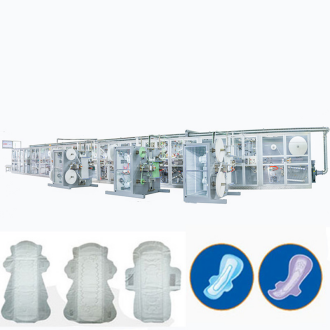
On high-speed converting lines, the difference between profitable throughput and chronic waste often comes down to how precisely tension is managed across the web path. Operators tend to focus on visible defects like wrinkles or baggy edges, but the real inefficiency hides in the control loop itself. A tension zone that oscillates by just a few percent forces downstream processes to compensate with slower ramp rates or higher scrap allowances. Over a full shift, those micro-corrections quietly eat into roll quality and machine availability, making tension control less about keeping the web from breaking and more about extracting every possible meter of sellable product from each parent roll.
The hidden battle is rarely fought at the unwind or rewind alone; it’s waged in the transitions. Splicing, acceleration, and diameter changeovers create dynamic load shifts that linear PID tuning struggles to follow without overshoot. Modern load-cell feedback and dancer positioning offer faster response, but their value depends on how well the control strategy anticipates inertia changes rather than simply reacting to them. Mills that treat tension as a static setpoint miss the point: the web is a flexible, nonlinear system, and efficiency gains come from modeling its behavior during speed changes, not from stiffening the control gains.
Material variability adds another layer to the efficiency equation. A tension profile optimized for one substrate can double edge curl or induce bagginess on the next roll if the control system cannot adjust its filtering and gain scheduling on the fly. The most successful operations treat web handling as a closed-loop learning process, where tension deviation data feeds back into recipe management and predictive maintenance. In that sense, the battle for hidden efficiency is won not by buying bigger drives or stronger frames, but by treating every meter of web as a sensor telling you where your control model is leaking margin.
How Recipe-Based Changeovers Remove Human Error from Line Setup
Manual changeovers rely on operators remembering dozens of settings, from fill weights to conveyor speeds. A single misplaced decimal or skipped step can wreck an entire batch. Recipe-based systems replace that mental checklist with a stored, validated set of parameters. The operator selects a product code, and the line configures itself—pump strokes, temperature zones, label sensors, all locked in. There’s no room for “I thought it was set to 300, not 30.” The machine refuses to run unless every critical value matches the approved recipe.
Errors often creep in during rushed shift changes or when a less experienced worker fills in. A recipe system flattens that learning curve. Instead of training someone on sixteen knob positions and three hidden submenus, you teach them to scan a barcode or pick a name from a dropdown. The system then walks the line through its own setup sequence, verifying sensors and confirming that the right tooling is in place before the first product ever moves. It’s not about making operators smarter—it’s about making the process idiot-proof without insulting anyone.
The real payoff shows up in traceability. When a batch goes wrong, you can pull the exact recipe revision and setup log instead of interviewing operators about what they might have touched. That level of certainty changes how audits feel and how quickly you can restart production. Over time, the collected setup data also reveals which parameters drift or cause the most rejects, feeding back into recipe refinements. Human error doesn’t disappear, but it stops being able to hide in the gap between “what we meant to do” and “what the line actually did.”
The Real Reason Servo Motors Cut Defect Rates at High Speed
Most people assume speed causes errors, but servo motors invert that logic. The closer a system runs to its torque limits, the more conventional stepper or induction drives lose position accuracy through missed steps, thermal drift, and settling time overshoot. Servo motors, by contrast, use continuous encoder feedback to correct position within microseconds, so acceleration and deceleration curves stay true even at high cycle rates. That means tooling meets the part exactly where it should, not where inertia predicts it might.
The real defect reduction comes from closed-loop velocity and torque regulation. At high speed, mechanical resonance and load changes become more pronounced; a stepper system may ring or stall, producing micro-cracks, misalignment, or surface finish variation. Servo drives actively damp those oscillations and adjust current thousands of times per second. The result is smoother motion, lower peak vibration, and fewer rejects caused by inconsistent force application.
It also helps that servos deliver full torque across a wider speed range, eliminating the torque fall-off that makes other motors lag behind the commanded trajectory. When the path is followed precisely, there is less scraping, bouncing, or incomplete forming. Defect rates drop not because the machine runs slower to be safe, but because the motion control finally keeps up with the speed.
Using Operational Data to Predict Wear Before It Stops the Line
Maintenance teams have long relied on scheduled inspections or the sudden screech of failing equipment to know when something is wearing out. The shift toward operational data changes that entire calculus. Instead of waiting for a visible fault, engineers now pull real-time signals from sensors already embedded in production lines—vibration, temperature, current draw, torque fluctuation—and feed them into lightweight predictive models. A subtle rise in motor current on a conveyor, for instance, might indicate increased friction from a bearing that is still weeks away from audible degradation. The goal is not to catch a breakdown, but to see the shape of normal wear evolving long before it becomes a line-stopping event.
That nuance matters because wear is rarely a cliff edge; it is a slope. Operational data captures the texture of that slope. By comparing a machine's current behavior against its own historical baseline rather than a generic manufacturer spec, teams can spot deviations that are unique to their specific load profiles, ambient conditions, and shift patterns. A spindle that runs hotter during third shift might be misread as a fault in a fixed-threshold system, but a baseline-aware analysis recognizes it as a predictable thermal cycle. This kind of context reduces false alarms and builds trust in the data-driven approach, making it easier for operators to act on early warnings instead of shrugging them off as another sensor glitch.
The practical payoff arrives when the prediction reaches the right person at the right moment. A well-designed system does not flood the CMMS with generic alerts; it prioritizes wear signals by their likely impact on throughput and suggests a narrow window for intervention. Maybe the worn gear can run two more weeks if the line speed is trimmed by three percent. Maybe the failing fan only becomes critical when ambient temperature crosses a threshold. That kind of decision support turns operational data from a passive record into an active tool for protecting uptime—not by eliminating wear, but by making it visible, predictable, and manageable before it ever stops the line.
Smaller Footprint, Lower Energy: The Overlooked Payoff of Servo Drives
When engineers evaluate servo drives, the conversation usually centers on torque bandwidth, feedback resolution, or network compatibility. The physical size of the drive rarely makes the shortlist. Yet a drive that is 30% narrower can mean fitting an extra axis into the same control cabinet, avoiding the cost and floor space of a second enclosure. That compactness also shortens cable runs, reduces wiring clutter, and makes commissioning a bit less painful.
The energy side is just as easy to overlook. Many modern drives sip power in standby and throttle intelligently under partial load, which trims both the electricity bill and the heat dumped into the panel. Lower heat output means smaller cooling fans or even passive convection in some cases, and that cuts maintenance on filters and air conditioners over the life of the machine.
These benefits don't show up in a spec sheet headline, but they accumulate quietly. A smaller cabinet footprint frees up plant space for other equipment, while lower thermal stress on nearby components tends to improve long-term reliability. For machine builders, that translates into fewer service calls and a more flexible layout—payoffs that are rarely mentioned in product brochures but are felt every day on the factory floor.
FAQ
Traditional lines rely on mechanical cams and gears that need manual adjustment whenever product specs change. Full servo systems replace those with independent motors on each station, so you can switch between pad lengths or absorbency levels through the control panel in minutes rather than hours. The real difference shows up in repeatability—servo axes hold position within a fraction of a millimeter every cycle, which mechanical linkages simply cannot match over long runs.
The gains come from three places. First, servo-driven stations accelerate and decelerate faster than cam-driven ones, allowing higher cycles per minute without sacrificing stability. Second, automatic registration and tension control cut down web waste from misaligned materials. Third, changeover times drop dramatically because recipes are stored digitally—operators no longer swap gears or adjust linkages. Many plants see overall equipment effectiveness rise by double digits after retrofitting.
Material feeding, cutting, core forming, and stacking see the biggest improvements. For example, servo-controlled cutting units can adjust blade timing on the fly to match web speed, eliminating ragged edges. Core forming stations use torque feedback to maintain consistent density even when pulp or SAP feed varies. Stacking and packaging axes also synchronize more smoothly, reducing jams at the discharge end.
Yes, that is one of its strongest selling points. Because every axis is programmable, you can store parameter sets for regular, overnight, and ultra-thin pads. Switching from a 240mm to a 320mm product might take under ten minutes if the material widths are pre-loaded. Some plants run three or four SKUs per shift on the same line, which would be unrealistic with mechanical change parts.
Operators do not need to be servo programmers, but they should be comfortable with a touchscreen interface and basic recipe management. The control system typically includes diagnostic screens that show exactly which axis faulted and why. Maintenance staff benefit from understanding servo drive parameters, but many vendors offer remote support where technicians dial in and adjust settings. The learning curve is steepest for those coming from fully mechanical lines, but it flattens within a few weeks.
It usually does, because closed-loop feedback corrects drift before it becomes a defect. For instance, if the elastic ear position starts shifting due to material tension changes, the servo adjusts automatically instead of continuing until bad product appears. Vision systems can also feed data back to servo axes for real-time alignment. The result is fewer rejected pads, less rewinding, and more consistent final packaging counts.
Servo systems only draw current when moving or holding torque against a load, so they consume less power during idle portions of the cycle. Regenerative braking can feed energy back to the DC bus instead of dissipating heat through resistors. While the initial investment is higher, plants often report lower electricity bills per thousand pads produced. The exact savings depend on line speed and product complexity, but it is a measurable factor.
Not necessarily. High-volume plants gain the most from running faster, but mid-sized manufacturers benefit from faster changeovers and lower waste, which matter more when batch sizes are smaller. A full servo line can be justified if you produce multiple SKUs or if material costs are a large share of your total. Even smaller companies sometimes choose servo modules for critical stations like cutting or core forming while keeping other sections mechanical.
Conclusion
The shift from cam timers to full servo control has reshaped what a sanitary pad line can achieve. Older mechanical systems fought a constant battle with inertia and fixed motion profiles, limiting speed and repeatability. Full servo drives remove those constraints, allowing each axis to accelerate, decelerate, and dwell independently. The result is not just faster output, but smoother material handling. Web tension, once a hidden source of waste and downtime, now stays under closed-loop control throughout the entire process, preventing stretch, drift, and misalignment that used to force slow crawl speeds or produce rejects. Combined with recipe-based changeovers, operators no longer rely on manual adjustments or personal experience. A stored parameter set loads the correct tension, temperature, seal timing, and cut length in seconds, eliminating setup errors that previously cost hours per product switch.
Beyond throughput, servo technology directly lowers defect rates at high speed. Because each motor follows an exact position profile, cutting, folding, and bonding happen with sub-millimeter precision even when the line runs at maximum pace. This predictability also generates a stream of operational data that maintenance teams can use to spot bearing wear, belt stretch, or seal degradation before a breakdown stops production. The overlooked payoff appears in the physical plant itself: a full servo line often needs 20-30% less floor space than a comparable mechanical line, and because servo drives only consume energy during actual motion rather than running constant cams and clutches, power draw drops sharply. For manufacturers facing tight factory footprints and rising energy costs, that combination of smaller size, lower consumption, and fewer unplanned stops makes full servo sanitary pad machinery less an upgrade and more a strategic necessity for staying competitive in modern production.
Contact Us
Contact Person: Jessie Lai
Email: [email protected]
Tel/WhatsApp: 86-188594442931
Website: https://www.wm-machinery.com