
Industrial Inkjet Printer Factory: A Deep Dive into Cutting-Edge Production
2026-05-27
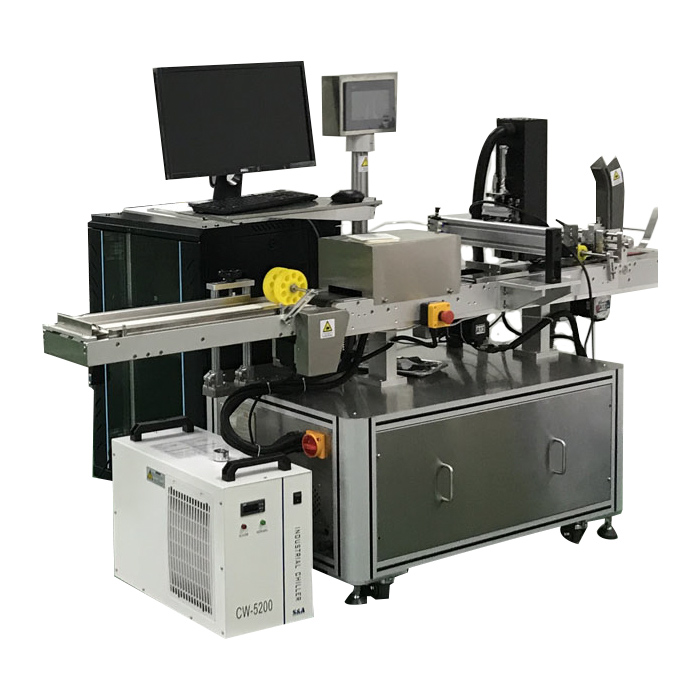
Step inside the cutting-edge world of Danmajet, where industrial inkjet printers are born from a fusion of precision engineering and relentless innovation. This isn’t just a factory tour—it’s a glimpse into how next-generation printing technology is redefining speed, quality, and reliability for businesses worldwide. Ready to see what makes these machines tick?
A Quiet Revolution in Inkjet Manufacturing
Beneath the familiar hum of desktop printers, a profound shift is reshaping how factories build everything from circuit boards to living tissues. Inkjet manufacturing has quietly moved beyond paper, repurposing its core precision to deposit functional materials layer by layer. Instead of ink, printheads now jet conductive polymers, ceramic slurries, and even stem cells with micron-level accuracy, turning additive fabrication into a tool that competes with traditional machining in speed, waste reduction, and design freedom.
The change slipped in almost unnoticed. Early adopters in electronics began printing flexible circuits on polymer films, eliminating the harsh etchants and masks of lithography. Automotive suppliers followed, jetting sleek, seamless control panels directly onto curved surfaces. Biomedical labs now use customized bioprinters to stack living cells into blood vessel models, a feat impossible with subtractive methods. Each industry picked up the technology not for novelty, but because it solved longstanding physical constraints—material compatibility, geometric complexity, and the cost of small production runs.
What makes this revolution quiet is also what makes it durable. There are no roaring lasers or grinding tools, just the soft clicking of piezo heads as they choreograph droplets by the picoliter. The same desk-sized machine can pivot from printing silver for antennas to printing proteins for drug screening, blurring lines between manufacturing and experimentation. As material libraries expand and nozzle arrays shrink, inkjet methods are silently rewriting the rules of production, one precise drop at a time.
From Concept to Cartridge: The Design Process
Every cartridge starts as a rough idea scribbled on a whiteboard or a napkin—some fleeting thought about how to make printing cheaper, faster, or less wasteful. The early phase isn't about precision; it's about volume. Designers throw out dozens of concepts, combining weird ink chemistries with unorthodox casing shapes, and then they tear them apart. Why? Because the best ideas survive the critique, not the brainstorm. That first sketch might look nothing like the final product, but it holds the kernel of something worth chasing.
Once a direction emerges, the real grunt work begins: translating a sketch into a functional prototype. This is where materials get real. Engineers wrestle with thermoplastics that need to withstand heat cycles, sealants that must stay airtight for years, and microchannels precise enough to control ink flow at a microscopic level. Prototypes get 3D-printed, slapped into a test rig, and run until they fail—sometimes after a few pages, sometimes after a few thousand. Each failure writes the next iteration, and slowly, almost stubbornly, the cartridge takes shape.
The final stretch is all about bridging the gap between what works in the lab and what survives in a warehouse. Tooling is cut, assembly lines are mocked up, and real-world abuse tests begin. Think about a cartridge sitting in a hot delivery truck, or a user who hasn't printed in months expecting perfect output on the first try. That's the bar. The design process doesn't truly end at launch either; field returns and feedback loop back, tweaking seal geometries or ink formulations for the next production run. A cartridge isn't just designed—it's slowly beaten into existence through iteration and hard lessons.
Precision Engineering Where Microns Matter
In the world of advanced manufacturing, a single micron can separate flawless performance from catastrophic failure. Our engineering philosophy revolves around this razor-thin margin, treating each micron as the defining boundary between mediocrity and mastery. From the vibration-dampening foundations of our machining centers to the temperature-controlled metrology labs, every element is orchestrated to safeguard dimensional integrity. We don't just measure in microns—we think, design, and breathe in them, ensuring that every component emerging from our process carries an invisible signature of exactitude.
Achieving micron-level precision requires more than just sophisticated equipment; it demands an almost obsessive attention to variables that most would consider negligible. Thermal expansion, tool wear, material inconsistencies, and even operator technique are all scrutinized under a lens of uncompromising rigor. Our engineers engage in a continuous dialogue with the manufacturing process, using in-process probing and real-time feedback loops to make corrections before deviations become defects. This proactive guardianship of tolerances means that the parts we produce aren't just within specification—they embody a kind of geometric truth that only comes from relentless refinement.
The true test of precision engineering isn't found on a calibration certificate but in the field, where components confront dynamic loads, temperature swings, and aggressive environments. By holding tolerances that others consider aspirational, we enable our clients to push the boundaries of what's possible in their own applications—whether that's a turbine blade rotating at supersonic speeds or a medical implant integrating seamlessly with living tissue. At this scale, engineering becomes a form of stewardship: we are entrusted with the physical limits of performance, and we honor that trust by making sure that every micron matters.
Inside the Ink Lab: Chemistry of Brilliant Colors
Color in ink isn't just mixed in—it's engineered at the molecular level. Pigments and dyes are chosen for how they absorb, reflect, or scatter light, with even slight shifts in particle size or chemical structure altering the final hue. In the lab, a deep blue might start as a copper phthalocyanine complex, while a fiery red could come from a quinacridone derivative, each molecule tuned to deliver maximum brilliance.
But a vibrant pigment alone won't flow onto paper. The real alchemy happens when these colorants meet binders, solvents, and rheology modifiers. Resins lock pigments in place, surfactants control spread, and additives prevent clumping or fading—all while preserving that intense, wet look even after drying. It's a delicate balance: too much binder dulls the color, too little leaves it chalky and prone to rub off.
Modern ink labs push this further, chasing longevity without sacrificing pop. UV absorbers, encapsulated nano-pigments, and cross-linking polymers now let inks survive sunlight and scrubbing while staying impossibly vivid. The result is a quiet chemistry that turns simple liquids into enduring, luminous records—on packaging, fine art, or everyday documents.
Assembly Lines That Think for Themselves
A modern assembly line doesn't just execute orders—it watches, learns, and second-guesses the process. Cameras catch microscopic flaws that human eyes would miss, while tiny tremors in a motor are read as early warnings. Instead of waiting for a breakdown, the line quietly recalibrates itself, swapping the sequence of tasks or slowing a robotic arm to avoid a snag.
This invisible conversation between machines reshapes how factories adapt. When a batch of parts arrives slightly off-spec, the line doesn't reject them outright. It tweaks its own grip pressure and angle, finding a way to use what’s there. That flexibility means less waste and fewer sudden stops—turning the rigid efficiency of yesterday into something closer to creative problem-solving.
What emerges is production that feels almost craft-like, but at a massive scale. Each station becomes part of a shared nervous system, sensing changes upstream and down, distributing adjustments like a murmuration of starlings. It’s assembly without a fixed script, where order emerges not from a central plan but from thousands of small, real-time choices.
Real-World Testing: Beyond the Spec Sheet
Spec sheets can tell you about megapixels and megahertz, but they rarely reveal how a device feels after a 12-hour workday. I’ve learned that lab benchmarks often miss the quirks that define daily use—like a phone that stutters when switching between map and music apps, or a laptop whose battery percentage drops unexpectedly during a video call. The real test happens when you’re not babying the device, but just living with it.
I once reviewed a tablet that seemed flawless on paper, yet its glossy screen became a mirror under office lights, making it nearly impossible to read. Another device boasted a 48-hour battery life, but only if you disabled every feature that makes it useful. Real-world testing means using gear the way people actually do: streaming, navigating, multitasking in less-than-ideal conditions. It’s about noticing how a keyboard feels after typing thousands of words, or whether a fitness tracker stays comfortable during sleep.
Numbers can guide you, but they don't capture the frustration of a fingerprint sensor that fails when your hands are slightly damp, or the joy of a device that stays cool and responsive even under the summer sun. That’s why I prioritize extended, unstructured use over controlled experiments. Only then do the subtle strengths and weaknesses surface—the details that ultimately decide whether a product earns a permanent spot in your life, or gets returned after a week of quiet disappointment.
FAQ
Today’s facilities blend precision engineering with smart automation, using real-time monitoring and adaptive robotics to handle everything from micro-nozzle assembly to printhead calibration under cleanroom conditions.
They rely on inline optical inspection and closed-loop feedback, where every nozzle is tested with high-speed cameras and AI-driven anomaly detection, automatically adjusting deposition parameters to maintain sub-picoliter uniformity.
Novel functional inks and substrate treatments are developed in adjacent labs, allowing rapid iteration—ceramic, conductive, and UV-curable formulations are printed and evaluated on-the-fly without slowing the production line.
It starts with a rigid chassis milled from a single block, then linear motors and vacuum platens are integrated. The ink system—degassing, filtration, and recirculation—is assembled in a sterile cell, and finally the electronics and firmware are flashed before a 72-hour stress test.
Beyond reducing VOC emissions with water-based inks, factories reuse purge solvents through distillation, harvest kinetic energy from robotic arms, and design printers for modular repair, minimizing e-waste.
MEMS-based printheads with thousands of individually addressable nozzles, AI that predicts maintenance needs from vibration signatures, and single-pass systems that coat irregular 3D surfaces at 100 meters per minute.
Cells are arranged in a U-shape for continuous flow, with component moves tracked by RFID. This minimizes part lifting, keeps cycle times under four hours from raw parts to finished printer, and allows instant reconfiguration for custom builds.
Cross-disciplinary teams—optical engineers, ink chemists, data scientists—work side by side on the floor. Apprenticeships and digital twin training environments help staff evolve with rapidly changing technology.
Conclusion
Step into the heart of an industrial inkjet printer factory and you'll witness a quiet revolution unfolding—one that marries artistry with atomic-level precision. The design journey begins not on a drafting board but in the minds of engineers and chemists who transform abstract concepts into tangible cartridges. Every droplet path is modeled, every color hue deconstructed in the ink lab where chemists balance viscosity, surface tension, and pigment stability to achieve brilliant, fade-resistant shades. It's a place where science and creativity fuse, and where the tiniest misstep in formulation can mean the difference between a crisp barcode and a smudged mess.
On the factory floor, this obsession with detail takes physical form. Precision engineering rules here—machined components align to tolerances measured in microns, because a single speck of dust can derail a printhead. Assembly lines have evolved into intelligent ecosystems, self-correcting and adapting through embedded sensors and machine learning without human intervention. Yet no printer leaves the facility until it endures a gauntlet of real-world testing that goes far beyond spec sheets: running thousands of pages at varying humidity, recoating with aggressive solvents, even simulating years of wear in compressed cycles. The result isn't just a machine; it's a testament to how modern manufacturing blurs the line between industrial brawn and scientific delicacy, all under one roof.
Contact Us
Contact Person: Jacky
Email: [email protected]
Tel/WhatsApp: 086 15000607053
Website: https://www.danmajet.com