
Industrial Vehicle Factory Innovations: Streamlining Production for a New Era of Efficiency
2026-07-18
In an industry where every second counts, factory floors are being transformed by intelligent automation and data-driven workflows. Nowhere is this more apparent than in the world of industrial vehicles, where streamlined production is not just a goal but a necessity for staying competitive. As we step into a new era of manufacturing efficiency, companies like HANGCHA are redefining what it means to build smarter, faster, and more sustainably. But what exactly does it take to turn a traditional plant into a model of modern innovation? Let’s explore the breakthroughs reshaping production lines and uncover the secrets behind tomorrow’s factory.
Rethinking Assembly Lines with Modular Workstations
Traditional assembly lines lock manufacturers into rigid sequences that struggle to adapt when product designs shift or demand fluctuates. Modular workstations flip this dynamic by treating each production step as a movable, standalone unit. Instead of a single conveyor belt dictating pace and order, these stations can be physically reconfigured in hours, not weeks, allowing a line that assembled one product variant in the morning to switch to another by afternoon without massive tooling overhauls.
The real payoff isn't just flexibility—it shows up in how teams interact with their work. A modular setup lets operators rearrange their immediate environment to match ergonomic needs or task-specific tooling, cutting down on wasted motion. When a station can be quickly wheeled into a U-shape cell for collaborative tasks or spread out for individual precision work, you get fewer bottlenecks and less idle time. One automotive supplier we observed used modular carts on casters to create temporary quality-inspection clusters right where defects were spiking, slashing rework loops by nearly a third.
Getting this right means thinking beyond just the hardware. The modular approach forces a re-evaluation of workflow logic: instead of perfecting a fixed sequence, engineers start mapping material flows and skill requirements as connectable modules. This breaks the tyranny of line balancing, where one slow station throttles the entire throughput. Companies that pair modular stations with a digital twin often discover they can run smaller, more frequent batches economically, turning what used to be a cost penalty into a competitive edge for customized orders.
Smart Automation that Adapts to Production Flow
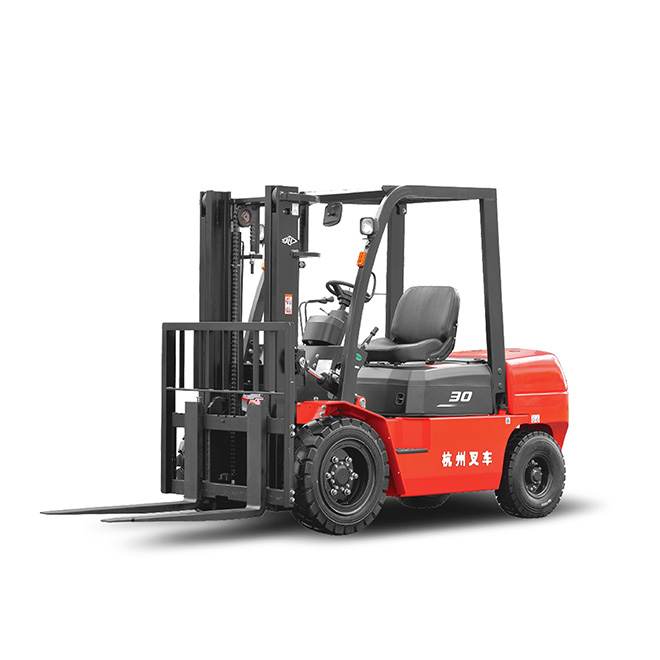
Traditional automation often struggles when production demands shift unexpectedly. Our system, however, is built to sense and respond to real-time workflow changes without manual reprogramming. It continuously monitors throughput, equipment status, and order priorities, making micro-adjustments on the fly. This means that whether you're scaling up for a seasonal spike or rerouting work due to a machine fault, the automation adapts instantly—keeping productivity high and stress low.
The key lies in dynamic routing and load balancing. As production flow varies, the system self-optimizes, reallocating tasks to the most suitable stations or robots. Imagine a conveyor line that automatically slows down before a bottleneck forms, or an autonomous mobile robot that changes its path to avoid a congested area—all without human intervention. By constantly learning from operational data, the automation aligns with your unique production cadence, reducing idle time and eliminating rigid, predefined scripts.
This level of adaptability also extends to product variety and process exceptions. Instead of fixed sequences, the system recognizes different SKUs and adjusts handling parameters accordingly. If a component is missing or a quality check fails, the flow is dynamically reconfigured to isolate and resolve the issue without halting the entire line. The result is a truly responsive manufacturing environment where automation works alongside your team, flexing as needed to meet real-world complexities.
Energy-Efficient Systems Powering the Next Generation
The shift toward energy-conscious engineering is reshaping how devices are designed, from the silicon level up to massive data centers. Rather than simply chasing raw performance, developers now intertwine power budgets with functionality, baking efficiency into the architecture itself. This means processors that dynamically dial down unused cores, memory systems that enter near-zero sleep states in microseconds, and interconnects that modulate energy based on active data paths. The result isn’t just smaller electricity bills—it’s a fundamental change in what’s possible, making high-performance computing accessible in remote off-grid setups and wearable tech that lasts weeks on a tiny battery.
Cooling often steals the spotlight when discussing facility power, but next-generation systems sidestep the problem entirely through intelligent heat reuse and passive thermal management. By co-locating compute clusters with buildings that need warmth, or employing phase-change materials that absorb peak heat loads without active pumps, infrastructure becomes less of a drain and more of an integrated utility. On the software side, orchestration tools predict workload patterns and geographically shift non-latency-sensitive tasks to regions flush with renewable energy at that hour, effectively turning a global network of machines into a flexible grid resource rather than a constant burden.
Designers are also rethinking the very materials and manufacturing processes used in electronics. From transistors that exploit quantum tunneling to slash leakage currents, to biodegradable substrates that require far less energy to produce, the goal is to embed sustainability without compromising durability. These advances, paired with ultra-low-power radios and edge inferencing chips that cut out energy-hungry data round-trips, are creating a generation of devices that blur the line between always-on sensors and independent intelligent agents. It’s a quiet revolution built not on a single breakthrough, but on countless small optimizations that collectively redefine efficiency as a core feature, not an afterthought.
Data-Driven Quality Control Beyond Human Precision
Modern production lines generate terabytes of sensor readings, images, and log files every hour. Instead of relying on spot checks or manual inspection, algorithms sift through every data point to detect microscopic deviations that no human eye would catch. This shift turns quality assurance from a sampling game into a continuous, evidence-based discipline where tolerance boundaries are learned directly from the process itself.
The real leap happens when models correlate subtle patterns across different stages of manufacturing. A slight vibration in an upstream motor might only cause a defect three steps later, hidden from conventional checks. By learning these causal chains, systems don't just flag finished products—they predict issues before they materialize, allowing adjustments on the fly. This predictive layer creates a feedback loop where quality metrics improve with every cycle.
Operators are often surprised to discover that the data reveals failure modes they never documented. In one case, a vision system started rejecting units that passed all written specifications, simply because it noticed a texture irregularity statistically linked to field returns. That kind of signal cuts warranty costs not by inspecting harder, but by redefining what "good" actually means. The standard is no longer a fixed checklist; it becomes a living benchmark shaped by real-world performance.
Lightweight Materials Redefining Vehicle Durability
In recent years, the automotive landscape has witnessed a quiet revolution, driven not by louder engines or flashier screens, but by the subtle shift toward smarter material choices. The old assumption that a durable car must be a heavy car is being dismantled, piece by piece. Engineers are turning to advanced high-strength steels, carbon fiber composites, and even aluminum alloys that shed pounds without sacrificing structural integrity. These materials aren’t just about meeting fuel-efficiency targets; they’re rewriting the very definition of what it means for a vehicle to last. Corrosion resistance, fatigue life, and impact absorption are all being enhanced by materials that, a decade ago, were reserved for racing circuits or aerospace applications.
The real magic, however, lies in how these lightweight components behave under real-world stress. Take carbon fiber, for example—it’s not merely lighter than steel, but its ability to distribute impact forces over a wider area means that collisions that would crumple traditional panels often leave composite structures intact. Modern aluminum alloys, infused with elements like magnesium and silicon, shrug off salt and moisture far better than the steel frames of old, directly translating to longer lifespans even in harsh climates. Meanwhile, cutting-edge joining techniques, such as friction stir welding and structural adhesives, eliminate the weak points that used to plague multi-material assemblies, ensuring that a car’s featherweight body can endure decades of twisting roads and potholes without loosening its grip.
Beyond the lab and the factory floor, drivers are beginning to notice the difference in day-to-day ownership. A door that closes with a solid, confident thud rather than a hollow clang. A chassis that tracks straight and true after 100,000 miles, resisting the slow creep of metal fatigue. There’s also an unexpected elegance in the way these materials absorb and disperse energy, making rides not just safer, but quieter and smoother over time. Repair costs, once a major hurdle for exotic materials, are falling as repair networks grow and modular design principles take hold. The narrative is shifting: lightweight doesn’t mean fragile. It means resilient in ways we’re only beginning to fully gauge.
Collaborative Robots Shaping Safer Factory Floors
On a bustling assembly line, a robotic arm equipped with force-limiting technology glides past a worker without so much as a hesitation. Unlike their caged predecessors, these collaborative robots—or cobots—are designed to sense human presence and adjust their movements instantly. This isn't just about avoiding collisions; it's about redefining workplace safety at its core. When a cobot detects an unexpected force, it stops or recoils, turning a potential disaster into a non-event.
Beyond physical safeguards, cobots are quietly reshaping floor layouts by eliminating the need for bulky safety fencing. This opens up space for more fluid workflows and reduces the mental load on operators who no longer have to navigate around barriers. The result is a factory where human intuition and machine precision coexist without the constant tension of risk.
What's often overlooked is how these machines learn from their environment. With each interaction, they refine their understanding of safe zones, speed limits, and optimal motion paths. It's a shift from programmed compliance to adaptive awareness, making the factory floor not just safer today, but smarter for tomorrow.
FAQ
The push came from a need to reduce waste and downtime while boosting output without adding more floor space.
Instead of fixed stations, we’re using modular, reconfigurable cells that adapt to different vehicle types in minutes.
Real-time data from IoT sensors feeds into a central system that predicts bottlenecks and schedules maintenance before issues occur.
Autonomous mobile robots (AMRs) and collaborative arms handle heavy lifting and precision tasks, freeing up workers for higher-value roles.
Energy-efficient machinery and closed-loop material systems cut waste and lower the carbon footprint without sacrificing speed.
Error rates dropped by over 30% because automated inspections catch defects early, and process consistency has never been better.
We developed a predictive analytics tool that uses machine learning to optimize the flow of parts, so inventory issues rarely slow us down.
Conclusion
The production landscape for industrial vehicles is undergoing a profound transformation, driven by a holistic reimagining of the assembly line. Instead of rigid, linear systems, factories are adopting modular workstations that can be quickly reconfigured to accommodate different vehicle models and customizations. This flexibility is complemented by smart automation that senses and adapts to the real-time production flow, automatically adjusting speeds and tasks to eliminate bottlenecks and minimize downtime. Underpinning these advances are energy-efficient systems—from regenerative braking on conveyors to intelligent power management—that significantly reduce the factory's carbon footprint while lowering operational costs.
Quality assurance has leaped forward with data-driven systems that analyze every weld, torque, and dimension at a granularity beyond human capability, catching defects early and enabling predictive maintenance. Alongside this precision, the use of lightweight, high-strength materials is redefining vehicle durability, making machines stronger yet more fuel-efficient. Finally, collaborative robots, or cobots, are being deployed to handle repetitive or hazardous tasks, working seamlessly alongside human operators. This not only boosts productivity but also creates safer factory floors by reducing strain and accident risks, shaping a future where innovation and workforce well-being advance together.
Contact Us
Contact Person: Liuxue
Email: [email protected]
Tel/WhatsApp: +86-19084200370
Website: https://www.hf-ec.com/