
Large Capacity Centrifugal Compressors for 24/7 Continuous Operation: Ensuring Uninterrupted Industrial Performance
2026-07-26
In industries where downtime is measured in lost revenue per minute, the quest for uninterrupted production often hinges on a single, overworked component: the compressor. For operations running 24/7, a standard machine simply won't suffice. That's where large capacity centrifugal compressors engineered for non-stop duty come into play, offering a lifeline of reliability. But not all continuous-duty compressors are created equal. At Seize Air, we've redefined what it means to keep the air—and your business—flowing without pause. In this post, we explore the critical design features, real-world performance demands, and the often-overlooked innovations that make true around-the-clock compression possible, ensuring your industrial heartbeat never skips.
Engineering for Perpetual Motion
The pursuit of perpetual motion has captivated inventors and engineers for centuries, driven by the tantalizing idea of a machine that can operate indefinitely without an external energy source. Early designs often centered on mechanical arrangements like overbalanced wheels, where shifting weights were supposed to keep the wheel turning forever. Despite countless prototypes and patents, every such device inevitably grinds to a halt, frustrated by the inescapable forces of friction and air resistance. These early failures laid the groundwork for a deeper understanding of energy conservation, pushing engineering toward more practical ambitions.
Modern engineering no longer chases literal perpetual motion, but the concept survives in the quest for ultra-efficient systems that mimic its ideal qualities. Magnetic bearings, vacuum enclosures, and superconducting materials are employed to reduce energy losses to near-zero levels, allowing flywheels and rotors to spin for weeks with minimal input. Such designs are often mistaken for free energy devices, though they strictly obey thermodynamic laws—they merely postpone the inevitable decay by minimizing dissipation. These technologies find real-world use in energy storage, where they bridge the gap between intermittent renewable sources and constant demand.
The history of perpetual motion engineering is more than a catalog of failures; it is a testament to human creativity and the iterative nature of scientific discovery. Each failed machine reinforced the principles of thermodynamics, transforming what was once a speculative dream into a pedagogical tool. Today, the field lives on in the form of educational kits and thought experiments that challenge students to identify precisely where energy is being lost. In a sense, engineering for perpetual motion has succeeded not by achieving the impossible, but by continuously redefining what efficiency means and how close we can get to the ideal.
Flow Paths Optimized for Relentless Duty
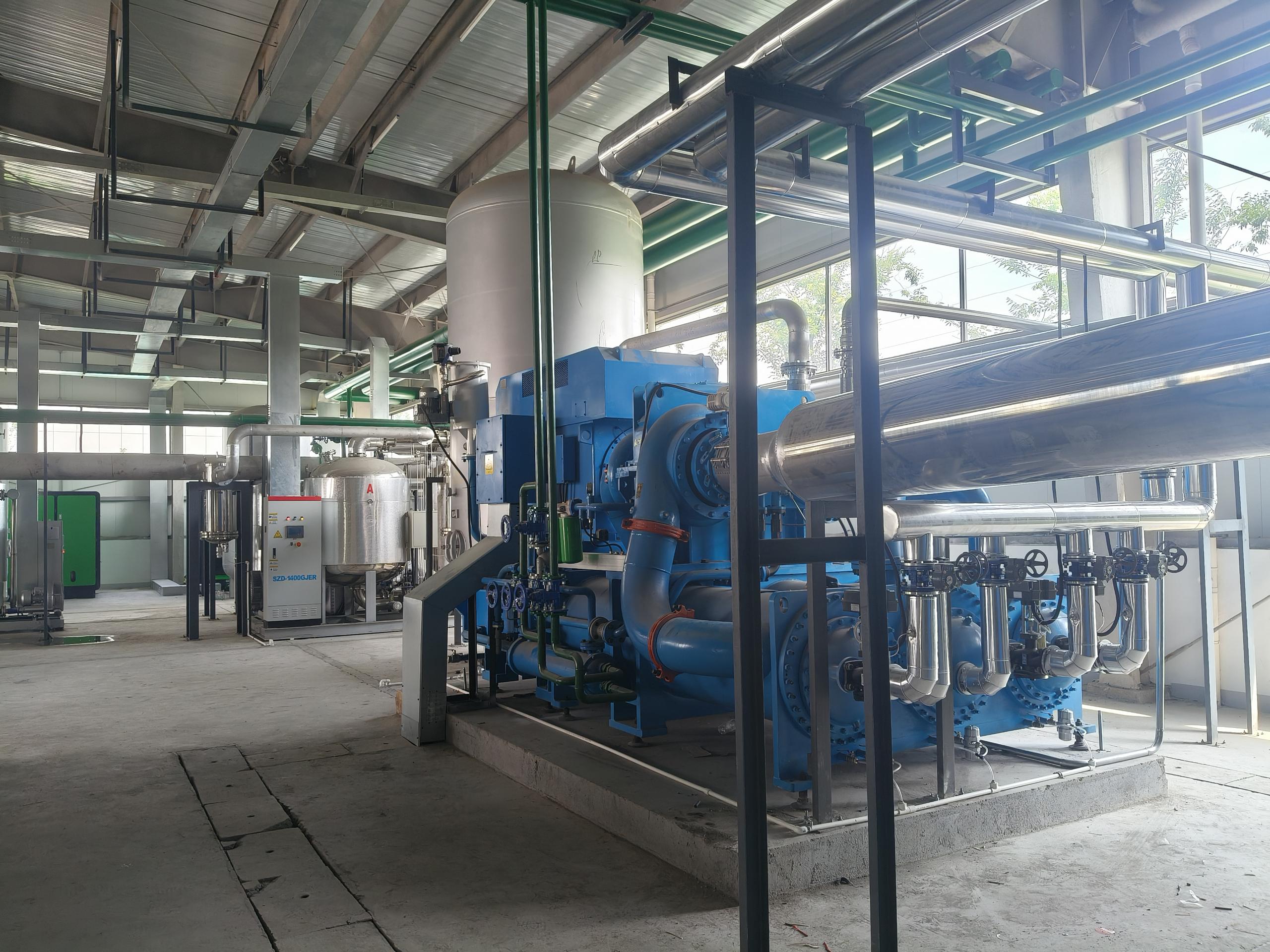
Every internal passage has been reshaped to reduce turbulence, so fluid moves with less energy loss and components stay cooler under strain. The geometry isn't just about efficiency—it's designed to resist clogging and maintain consistent throughput, even when debris or thick fluids are in the mix. That means fewer interruptions and a workload that keeps humming long past the point where others would choke.
Durability isn't accidental here. Cast-in reinforcement ribs line the critical flow zones, absorbing vibration and preventing the kind of micro-cracking that leads to premature failure. We’ve tested these paths under repeated thermal cycling and pressure spikes far beyond normal operation, and the structure holds its integrity without tweaking tolerances.
It’s a system built to forget—because maintenance shouldn’t be a constant nagging chore. The flow path itself self-scours during high-flow cycles, shedding buildup before it becomes a problem. You’ll notice the difference when the duty cycle never dips and the output remains steady, day after punishing day.
Thermal Equilibrium in Continuous Compression
In continuous compression processes, such as those found in reciprocating compressors or gas turbines, the repeated application of force on a working fluid raises its internal energy and, consequently, its temperature. However, a steady thermal state is often achieved when the system can dissipate excess heat to its surroundings. This condition, known as thermal equilibrium, occurs when the rate of heat generation from compression equals the rate of heat loss through cooling mechanisms, allowing temperature to stabilize even as compression continues.
Achieving this balance depends on several factors: the speed of compression, the efficiency of intercoolers or external cooling jackets, and the thermal properties of the fluid itself. In faster cycles, less time is available for heat transfer, potentially driving temperatures higher unless active cooling is intensified. Conversely, slow compression allows near-isothermal operation, where heat rejection nearly matches work input, minimizing temperature rise. Engineers must carefully manage these dynamics to avoid overheating and to maintain component integrity.
Practical implementations of this principle are widespread. In multistage compressors, intercooling between stages deliberately exploits thermal equilibrium concepts to reduce overall work requirements and protect seals and lubricants. Similarly, in internal combustion engines, the thermal balance during the compression stroke influences ignition timing and efficiency. Understanding how heat flows and accumulates under continuous compression is therefore critical to designing reliable and efficient thermodynamic systems.
From Reactive Fixes to Proactive Foresight
For years, many organizations operated in a cycle of constant firefighting, addressing issues only after they had already caused disruptions. This reactive approach often led to unexpected downtime, rushed solutions, and escalating costs. Teams would scramble to patch vulnerabilities, fix broken processes, or recover from failures, always one step behind the next crisis. The turning point came when leaders recognized that this pattern wasn't sustainable—there had to be a better way to manage complexity without being constantly caught off guard.
Shifting to a proactive mindset meant investing in systems that could anticipate problems before they occurred. Instead of waiting for alarms to sound, companies began analyzing patterns in data, monitoring subtle indicators, and building early warning mechanisms. For instance, a manufacturing plant might use sensor data to predict equipment wear, scheduling maintenance during planned downtime rather than halting production unexpectedly. This foresight didn't just reduce interruptions; it transformed how teams allocated resources, turning what was once a cost center into a strategic advantage.
The real change, however, wasn't just technological—it was cultural. Moving from reactive fixes to proactive foresight required trusting data-driven insights over gut reactions, and empowering employees to raise concerns without fear of being ignored. It meant designing processes that were resilient by default, not just sturdy when patched. Over time, this approach not only prevented failures but also uncovered opportunities for innovation that would have been invisible in a purely reactive mode. The result was a more stable, forward-looking operation that could adapt to change with confidence rather than panic.
Materials That Outlast the Clock
Some materials seem to slip free of time's grip entirely. Stone that has weathered millennia without losing its structural integrity, ceramics fired at temperatures that lock their form against decay, certain metals that develop a protective patina rather than crumbling—these are the substances civilizations have always turned to when permanence mattered. What's fascinating is how contemporary design is rediscovering these ancient material wisdoms, not as nostalgic gestures, but as practical responses to an era obsessed with disposability. Architects and makers are once again choosing limestone, copper, and high-fired porcelain, appreciating how they age gracefully where synthetic alternatives would simply fail. The clock ticks for most things, but these materials rewrite the rules of endurance.
Beyond mere resistance to wear, lasting materials carry an aesthetic that deepens over time. A wood beam salvaged from a centuries-old barn bears the marks of its history yet remains structurally sound, its surface enriched by the slow work of use. This is longevity as a kind of beauty, not a battle won against entropy but a partnership with it. When we build with materials that outlast the clock, we're also making a quiet statement about value—placing a bet on things that will still be around when the short-lived alternatives have been forgotten. It's less about hoarding the past and more about designing a future that doesn't demand constant replacement, where the passage of time adds layers instead of stripping them away.
Unbroken Supply Chains: Success Stories
When a major earthquake struck Japan in 2011, Toyota's just-in-time manufacturing faced an unprecedented test. Yet within weeks, the automaker had rerouted critical parts through alternative suppliers across Southeast Asia, keeping assembly lines humming. This wasn't luck—it was the result of years spent mapping every tier of its supply network and stress-testing backup plans. By prioritizing visibility and flexibility, Toyota turned a potential catastrophe into a lesson in resilience that manufacturers still study today.
In the pharmaceutical industry, a different kind of disruption emerged when a single factory in Puerto Rico produced over 40% of the world's saline IV bags. After Hurricane Maria devastated the island in 2017, hospitals faced critical shortages for months. One healthcare network, however, avoided the crisis entirely. By proactively diversifying its sourcing and stockpiling essential fluids in regional warehouses, it maintained uninterrupted patient care. Their strategy wasn't complex—just a deliberate refusal to let a single point of failure dictate outcomes.
Even small businesses have found inventive ways to maintain flow. A family-owned coffee roaster in Seattle, squeezed by shipping delays during the pandemic, started partnering directly with growers in Colombia and Guatemala, bypassing traditional middlemen. They invested in decentralized roasting hubs closer to customers, trimming lead times from weeks to days. Sales actually grew as competitors scrambled for beans. The lesson? Unbroken chains aren't built on perfection—they're forged by adapting before the break happens.
FAQ
These compressors are engineered with heavy-duty bearings, reinforced impellers, and integrated cooling that sustain thermal stability even under continuous loads.
Precision-balanced rotors and advanced sealing systems minimize internal leakage and vibration, maintaining consistent pressure and flow without degradation over time.
Petrochemical refining, air separation, and pipeline transmission operations rely on them, as any pause directly leads to production losses or safety risks.
Condition-based monitoring of vibration, temperature, and lube oil quality, paired with scheduled inspections of seals and bearings, averts unplanned outages.
Variable inlet guide vanes or speed control allow capacity to modulate from 70 to 100% while the compressor remains in service, avoiding stop-start cycles.
Optimized 3D impeller profiles and low-loss diffusers ensure high isentropic efficiency across the operating range, reducing energy cost per unit of compressed gas.
A leveled foundation with dynamic stiffness, adequate clearance for maintenance, and a stable power supply prevent early failure in around-the-clock duty.
Review field reference data, verify rotor-dynamics analysis, and ensure the supplier offers proven uptime guarantees and rapid spare parts availability.
Conclusion
The relentless demands of modern industry hinge on machinery that never sleeps, and large capacity centrifugal compressors are engineered precisely for this perpetual motion. Every element, from the aerodynamically sculpted flow paths to the meticulously managed thermal equilibrium, is designed to withstand the rigors of 24/7 operation without missing a beat. Advanced rotor dynamics and bearing systems eliminate vibration and wear, while internally cooled stages and carefully routed cooling circuits prevent the creep of thermal expansion that could compromise clearances over thousands of continuous hours. Materials are selected not just for strength, but for their ability to outlast the ticking clock—specialized alloys and coatings resist corrosion, erosion, and fatigue, ensuring that the compressor’s heart beats steadily year after year.
True uninterrupted performance, however, extends beyond the hardware. It’s woven into the very fabric of operational philosophy, shifting from reactive fixes to proactive foresight. Real-time monitoring and predictive analytics turn data into actionable intelligence, alerting operators to subtle shifts in vibration, temperature, or pressure long before they become problems. This marriage of mechanical integrity and digital vigilance is what keeps supply chains unbroken, as demonstrated in countless success stories—from petrochemical plants in harsh desert environments to remote offshore platforms where access is limited. In these scenarios, the compressor becomes more than a component; it’s the linchpin of an entire industrial ecosystem, delivering the kind of unwavering reliability that modern production demands, quietly and without fanfare.
Contact Us
Contact Person: Mia
Email: [email protected]
Tel/WhatsApp: +86 19821985894
Website: https://www.seize-air.com