
OEM Agricultural Machinery Parts That Deliver Long-Lasting Performance in the Field
2026-10-23
Every hour lost to a cracked casting or worn coupler costs more than downtime—it eats into yield. That’s why serious growers look beyond generic replacements to OEM agricultural machinery parts that hold up season after season. Zhaoyuqi builds precisely to those standards, so you spend less time wrenching and more time working the field.
Built for the Back Forty, Not the Showroom Floor
This machine never met a paved road it liked. The frame is overbuilt with reinforced stress points, the suspension eats ruts for breakfast, and the drivetrain shrugs off mud that would send showroom queens crying for a detailer. It's not here to look pretty in a parking lot—it's here to drag fence posts, haul feed, and run the back pasture until the sun gives up.
Every control is laid out for gloved hands on rough terrain, not for a photo op. The seat is firm, the floor is washable, and the grease fittings are right where your knuckles can reach them without a yoga class. You won't find glossy trim or fragile touchscreens. You'll find steel, simple switches, and clearance that lets you ignore the rocks you used to dodge.
After a week of brush, barbed wire, and creek crossings, it still starts on the first crank. That's the whole point. No wax, no polish, no garage queen status—just a tool that earns its keep from the barn to the back quarter and never once complains about getting dirty.
OEM Fit That Ends the Trial-and-Error
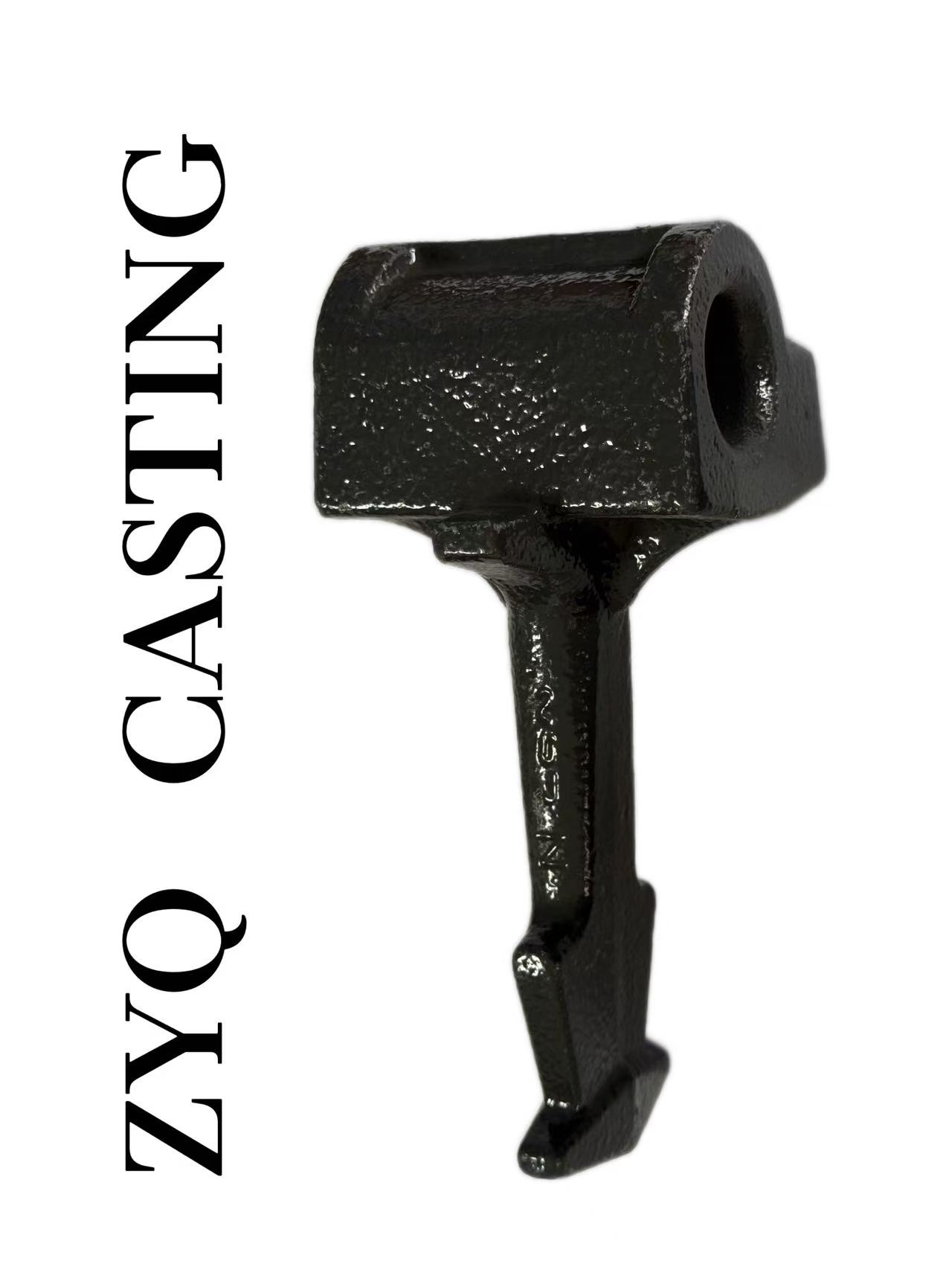
You know the drill: order a part that 'should' fit, spend twenty minutes lining up brackets, then realize the mounting holes are off by half an inch. That whole routine disappears when the component is built to the same tolerances as what rolled off the assembly line. No shims, no forcing, no second-guessing—just a clean alignment the first time you slide it into place.
The real difference shows up in the details people usually overlook. Clip positions, wiring channels, even the curve of a trim edge all match the factory blueprint. Because those small contact points line up exactly as designed, the part sits flush and behaves like it was never replaced. That means fewer adjustments, fewer stripped fasteners, and no need to keep a drawer full of 'almost right' returns.
For anyone who has wrestled with a slightly-off aftermarket piece, the upgrade is immediate. What used to be an afternoon of fiddling becomes a bolt-on task you can finish before the engine cools. That confidence—knowing the part will drop in and lock down—turns an annoying swap into a quick, forgettable step.
Metal That Outlasts the Harvest Rush
During the busiest weeks of harvest, equipment runs nearly nonstop, and the metal that holds it together must shrug off fatigue like a seasoned farmhand paces a long row. The trick lies not in a single exotic alloy but in how grain carts, augers, and combine frames are built to flex and return — heat-treated steel that resists cracking at the welds, abrasion-resistant liners in chutes that swallow thousands of bushels without thinning, and fasteners treated to laugh at vibration. When every hour of downtime costs real money, the difference between ordinary steel and the right metal shows up as an extra field finished before the rain.
Less obvious is what happens at the grain bin and the dryer, where metal meets moisture and heat in cycles that would rust lesser material inside two seasons. Here galvanized coatings and stainless steel wear strips earn their keep, their surfaces shedding chaff and condensation while resisting the slow pitting that turns a bin wall into a sieve. Farmers who have rebuilt a rusted auger once tend to notice the change — a smoother sheet, a heavier gauge, a hinge that still swings true after ten thousand loads. That durability is not an accident; it is a quiet bet against the calendar, placed long before the first truck rolls in.
Even the smallest hardware earns its place in this season. Shear bolts that snap exactly when they should, saving a gearbox from a rock; chain links with hardened pins that stretch a fraction less each day; wear plates on a header that keep the cut clean through the last acre. Together they form a kind of stubborn arithmetic — every fraction of an inch saved from wear translates into longer runs, emptier repair bays, and a grain cart that still shines at the edge of a field years after the rush has passed.
Long Runs Without the Mid-Season Swap
Most runners know the frustration of finally breaking in a pair of shoes only to feel them lose their spring by week eight. The mid-season swap used to be an accepted part of training cycles, but newer foam compounds and outsole rubbers have quietly changed that expectation. A well-built daily trainer now holds its cushioning and grip well past the 400-mile mark, letting you log long runs without wondering when the next box will arrive.
The difference often comes down to how the midsole is tuned. Instead of relying on a single soft layer that flattens quickly, several current models use dual-density setups that preserve rebound over hundreds of miles. Paired with a full-contact rubber outsole that wears evenly, these shoes keep their ride character from the first long run to the last. That means one less variable to manage during a training block, and more mental energy for the actual miles.
Tight Tolerances, Zero Second-Guessing
Every machined surface gets checked against the print before the spindle stops spinning. We hold ±0.0002 inches on bores and faces without breaking a sweat, and the same care goes into less glamorous corners like thread depths and chamfer angles. No one here ever says 'close enough' — either the dimension matches what the drawing demands, or the part doesn't leave the bench.
That kind of discipline doesn't come from fancy inspection gear alone. It comes from cutting a test piece every morning, adjusting offsets while the chips are still warm, and trusting the numbers over the gut. When a customer asks if we can hit a true position of 0.001 inch, the answer isn't a maybe. It's a setup sheet with the exact tool path, the exact fixture torque, and the exact reversal check we'll run before we ever call the job done.
The real payoff is what happens after the parts ship. Assemblies go together without shims, bearings seat on the first try, and covers align with the bolt holes they were meant to. Nobody loses a half-day fighting a stack-up that should have been caught at the machine. That's the whole point: tight tolerances aren't a spec we chase — they're the standard we assume, so every hand downstream can work without a second thought.
When Replacement Parts Match the Original Work Ethic
There's a quiet satisfaction in swapping a worn gear or a frayed belt for a part that feels made to the same stubborn standard as the rest of the machine. It's not just about keeping things running; it's about respecting the original intention behind every bolt and bearing. When a replacement component slots in without fuss, it whispers that the people who built this thing weren't interested in shortcuts.
Over time, I've learned to look for that unspoken match. It shows up in the weight of the casting, the crispness of the threading, the way a seal seats without excessive force. Cheap copies might fit visually, but they betray themselves within weeks. The good ones? They belong, as if they'd been sitting on the shelf since the machine left the factory decades ago.
That's the work ethic I admire most: not flashy innovation, but the dogged refusal to let a legacy piece down. Whether it's a tractor from the 1970s or a press that's outlived three owners, the right replacement part honors the original builder's pride. It says, "We still care enough to make it exactly like it was."
FAQ
We start with the original equipment drawings and then adjust the metallurgy and heat treatment for the specific stress points. That means higher fatigue resistance on shafts and better abrasion tolerance on tillage edges, so the part doesn't just fit — it keeps working through rocky soil, heavy residue, and long harvest windows.
Yes. We work from the manufacturer's part numbers and dimensional data, then run a pre-production sample against your machine's mounting points and torque requirements. Small deviations like bolt-hole chamfer or bushing clearance are checked before the first production run.
It depends on the part. For ground-engaging tools we typically use boron-alloyed steels with a tempered martensitic structure. For housings and brackets we often use ductile iron or high-strength cast steel. The goal is to balance hardness with enough toughness to avoid cracking under impact.
No special maintenance beyond what you would do for the original part. We do recommend checking torque on fasteners after the first 20-30 hours and greasing pivot points at normal intervals. That keeps the wear surfaces seated correctly and prevents premature stress from loose fitment.
We keep a reference library of OEM prints for common series like John Deere 6R/7R, Case IH Magnum, and New Holland CR. Each part is assigned to a specific model range and production year, and we verify the critical interface dimensions with coordinate measuring equipment before release.
Yes. We run field trials with partner farms across different soil types — from sandy loam to heavy clay — for one full season. We measure wear rate, dimensional stability, and fastener loosening. Only parts that stay within 5% of the original's wear pattern are approved for full production.
For a part that requires new tooling or forging dies, expect 10-14 weeks from drawing approval to first shipment. For repeat orders of existing parts, we can usually ship in 3-4 weeks. Urgent batches can be expedited if we have raw material on hand.
We ask for photos of the failed area, the machine's serial number, and the hours of use. If the failure is due to material defect or our manufacturing process, we replace the part and cover freight. We don't cover damage from collision, improper installation, or using the part outside its designed load range.
Conclusion
A replacement part that looks right on the shelf doesn't mean much when the real test starts at the field edge. These OEM agricultural components are built for the long, unglamorous hours that actually put food on the table—turning through rocky soil, running beside fence lines, and shaking off dust that would choke a lesser machine. You won't find chrome-plated shortcuts here. The metal is selected and treated to take the abuse of a harvest rush, not just to pass a quick visual inspection. When the season tightens and every pass counts, that difference shows up as fewer breakdowns and a lot less time staring at a tractor that should be moving.
Fit is where the trial-and-error ends. Instead of wrestling with a near-miss part that almost lines up but still leaves a gap, these components slide into place with the same geometry as the original. Tight tolerances mean you're not second-guessing whether a seal will hold or a bearing will seat properly at 2,000 rpm. And because the materials and heat treatment match the factory spec, you get long runs between swaps—mid-season replacements become the exception, not the rule. That's what happens when a replacement part carries the same work ethic as the machine it keeps alive: it shows up, fits right, and stays out there until the job is done.
Contact Us
Contact Person: Nico Yin
Email: [email protected]
Tel/WhatsApp: 8618561567088
Website: https://www.ductileironparts.com/
