
OEM Metal Lathe: Mastering Precision Turning for Custom Manufacturing
2026-07-31
In custom manufacturing, precision is everything. OEM metal lathes are the backbone of high-stakes turning, but not all machines deliver the accuracy modern projects demand. Enter WINNRUI CNC, where purpose-built engineering meets uncompromising control. This isn't just about cutting metal—it's about mastering every micron to transform raw stock into flawless components. Whether you're tackling complex geometries or tight tolerances, understanding what sets a true OEM solution apart will change how you approach your next build. Let's explore what it takes to turn with confidence.
What an OEM Metal Lathe Brings to the Shop Floor
An OEM metal lathe isn’t just another machine—it’s a commitment to precision that resonates through every project on the shop floor. Unlike generic alternatives, these lathes arrive with a pedigree of integrated design, where components are engineered to work in unison from day one. This harmony cuts down on the micro-adjustments and unexpected hiccups that often plague mixed-brand setups, letting machinists focus on the work rather than wrangling with the equipment.
The real value shows up in the longevity and support that come baked into an OEM solution. Spare parts align perfectly, documentation is thorough, and the manufacturer’s expertise isn’t just a hotline away—it’s woven into the machine’s DNA. For a shop floor, that means less downtime chasing obscure fixes and more time delivering consistent, high-tolerance parts. It’s a return to craftsmanship where the tool becomes an extension of the operator, not a bottleneck.
There’s also an understated flexibility that an OEM lathe injects into daily operations. With accessories and upgrades designed specifically for the platform, adapting to new materials or complex geometries doesn’t require a full overhaul. This keeps the shop floor agile, ready to pivot from a rush order to a long-run production without skipping a beat, all while maintaining a level of surface finish and accuracy that becomes the team’s quiet competitive edge.
Turning Intricate Profiles Without Sacrificing Accuracy
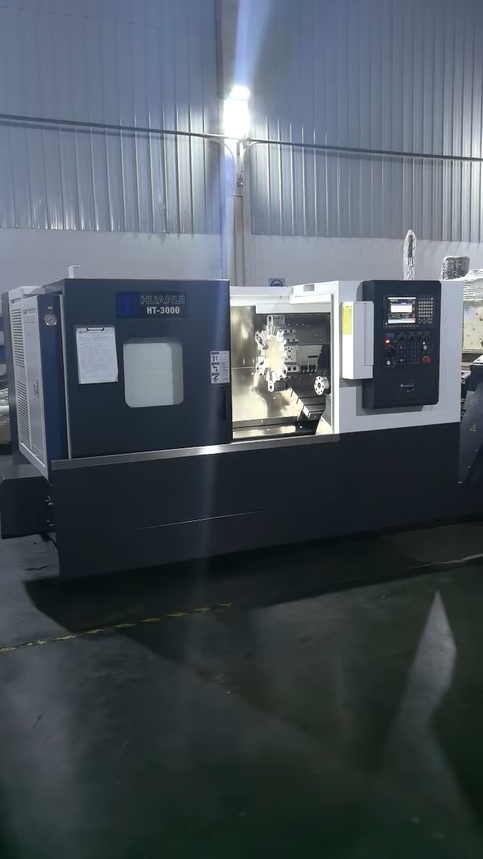
Machining intricate profiles often forces a trade-off between complexity and precision. We’ve put that notion to rest by pairing adaptive toolpath algorithms with real-time spindle control. The result is a process that maintains micron-level consistency even as geometries shift from sweeping curves to sharp undercuts, allowing delicate features to emerge without chatter or deviation.
What truly sets our approach apart is the ability to preserve surface integrity across abrupt contour changes. Instead of relying on multiple finishing passes that can degrade fine details, our system interpolates tool engagement continuously. This means a single, smooth motion can handle the transition from a deep pocket radius to a thin-walled protrusion, leaving a flawless finish that mirrors the design intent without a hint of overcut or scalloping.
Operators can now push the boundaries of part design without second-guessing machine capabilities. By eliminating the need for separate roughing and semi-finishing routines on tricky profiles, cycle times drop while dimensional accuracy holds steady. It’s a shift from cautious, multi-step strategies to confident, single-setup execution that handles everything from organic medical components to aerodynamically critical vanes with equal finesse.
Matching Material to Application: A Practical Guide
Selecting the right material isn't just about durability or cost—it's about how the material behaves under specific conditions. A plastic that works perfectly for a kitchen utensil might warp or degrade when used in a high-temperature industrial setting. Start by listing every demand the final product will face, from mechanical stress and chemical exposure to UV light and moisture. Then, prioritize these requirements based on real-world usage, not hypothetical extremes.
Once you've nailed down the performance requirements, dig into the less obvious factors. How will the material interact with other components? Will it expand or contract with temperature changes, causing joints to fail? Consider the manufacturing process too: some materials are easy to injection mold but impossible to weld, while others offer great strength but require specialized tooling. The gap between a successful prototype and a production nightmare often comes down to these overlooked details.
Finally, never underestimate the value of hands-on testing. Data sheets give you numbers, but they can't replicate the quirks of your exact application. Build a small batch, subject it to accelerated aging, and let real users handle the product. A material that ticks every box on paper might fail because of something no one predicted—like a cleaning solvent used in the field. Iterate quickly, and don't be afraid to challenge the initial assumptions if the evidence points elsewhere.
The Role of Automation in Repeatable Custom Work
In any field where custom work is a regular part of the business, efficiency often hinges on the balance between human creativity and machine precision. Automation steps in to handle the repetitive but essential building blocks, allowing skilled professionals to focus on the aspects that truly demand their expertise. Instead of manually setting up the same base configurations or performing identical quality checks for each new project, automated processes take over, ensuring consistency and freeing up time for innovation. This shifts the nature of repeatable custom work from a drain on resources to a scalable, high-value operation.
One of the less obvious advantages of automating repeatable elements is the reduction of human error in parts of the process that are, by definition, mundane. When people are forced to repeat the same steps dozens of times, their attention drifts, and small mistakes creep in—mistakes that often require costly rework. Automation not only eliminates these errors but also captures data about every execution, which can be analyzed to refine the custom components even further. The result is a feedback loop where the automated parts become smarter over time, indirectly enhancing the quality of the entire output.
For teams that handle a high volume of tailored projects, automation also dismantles the myth that customization cannot be efficient. By treating the predictable, repeatable chunks of work as a programmable foundation, companies can deliver personalized results faster than their competitors. This isn't about cookie-cutter solutions; it's about automating the invisible scaffolding so that the visible craftsmanship can shine. When done right, clients never notice the automated parts—they only experience a seamless, high-quality product that feels entirely bespoke.
Adapting the Lathe for Unusual Component Geometries
Standard lathes are purpose-built for cylindrical forms, but with thoughtful modification they can tackle a surprising range of unconventional shapes. Eccentric turning, for instance, becomes possible by offsetting the workpiece in a four-jaw chuck or using a dedicated eccentric mandrel. This approach allows you to machine crankshafts, camshafts, or decorative pieces with off-center features. The key is precise measurement and secure clamping to maintain the desired offset throughout the operation.
For non-circular cross-sections, a technique known as ornamental or polygon turning comes into play. By synchronizing the spindle rotation with a secondary cutter movementâoften through a rosette or geometric chuckâyou can produce ellipses, hexagons, or intricate repeating patterns. While these specialized chucks are rare, one can improvise a simple polygon turning setup using an indexing mechanism on a milling attachment mounted to the lathe carriage. The result is a symmetrical, faceted surface that defies the latheâs usual constraints.
When faced with deeply recessed or internal geometries, boring bars and form tools can be custom-ground to create shapes that standard inserts cannot reach. A common example is machining an internal O-ring groove or a contoured bore without dedicated tooling. By hand-grinding a high-speed steel blank to the required profile and carefully feeding it into the workpiece, you can achieve a negative angle or an undercut that a conventional boring head would miss. This manual approach demands patience and a steady hand, but it transforms the lathe into a versatile tool for one-of-a-kind components.
Ensuring Every Part Meets Spec: Measurement and Verification
Precision doesn't happen by accident. Every dimension, surface finish, and material property is verified against the original specifications using calibrated instruments and documented procedures. From coordinate measuring machines that map complex geometries down to the micron, to handheld gauges that confirm critical fits at the assembly line, the measurement process is woven directly into production. This isn't just a final checkpoint—it's a continuous feedback loop that catches deviations before they compound.
Verification goes beyond simply ticking boxes on an inspection report. It means cross-referencing first-article results with ongoing process capability data, ensuring that what passed at setup still holds true at mid-run and end-run. When a dimension drifts even slightly out of tolerance, the system flags it immediately, triggering a review of tool wear, thermal effects, or material batch variations. That kind of responsiveness turns metrology from a gatekeeper into a driver of consistency.
Ultimately, confidence in every part stems from the rigor behind the numbers. Specialized inspections—like non-destructive testing for internal flaws or optical scanning for freeform surfaces—add layers of assurance that a simple pass/fail check could miss. And because all records tie back to individual serial numbers or lot codes, you can trace the entire measurement history of any component. That transparency closes the loop between design intent and physical reality, making spec compliance a guarantee, not an aspiration.
FAQ
An OEM metal lathe is built or branded by a manufacturer to be integrated into another company's product line or used under their name. Unlike a standard off-the-shelf lathe, it's often customized in specs, controls, or accessory mounts to match specific production workflows. The core difference lies in flexibility—OEM lathes arrive tailored to unique shop requirements without the user having to mod a general-purpose machine.
It's a combination of rigid construction, high-grade spindle bearings, and meticulous calibration. These lathes minimize vibration through heavy cast bases and use linear guides or hand-scraped ways. Temperature-controlled environments help, but the real secret is in the feedback loop—precision ground ballscrews and direct-drive servos can hold micron-level repeatability once properly tuned.
You'll see them heavily in automotive prototyping for one-off shafts or bushings, medical device manufacturing where implant components need mirror finishes, and aerospace for turned parts with exotic alloys. Small batch jewelry and watchmaking also rely on OEM lathes when standard tooling can't handle the delicate work or unique collet designs.
First, think about your workpiece envelope—maximum swing and distance between centers. Then focus on the spindle bore and chuck type, because that dictates the stock you can run. Don't overlook control options: manual, CNC, or a hybrid. Also, investigate how easily you can source consumables like belts and bearings down the road, and whether the manufacturer offers alignment support during setup.
Regular lubrication is non-negotiable—follow the factory schedule precisely. Keep the ways and lead screws spotless, and periodically check the lathe's leveling because foundation shifts can induce twist. Have a trusted technician perform a geometric accuracy test annually, and replace spindle bearings at the first sign of noise rather than waiting for a failure. Small habits like releasing tension on the belts overnight also extend precision life.
Conversational programming interfaces have slashed setup times, while live tooling capabilities let you mill and drill without moving the part. In-process probing now corrects tool wear automatically, and some OEM configurations include friction stir welding attachments for hybrid manufacturing. Real-time torque monitoring is also becoming common to prevent crashes and extend insert life.
Conclusion
Bringing an OEM metal lathe onto the shop floor transforms how a team approaches custom manufacturing. It’s not just about raw horsepower; it’s the effortless fusion of rigidity, thermal stability, and user-centric controls that lets machinists push boundaries without second-guessing the machine. When automation enters the picture—bar feeders, gantry loaders, or live-tool sub-spindles—repeatable custom work stops being a bottleneck. Jobs that once demanded constant operator attention now run lights-out with consistent part quality, freeing up skilled hands for more complex problem-solving. This marriage of precise mechanical design and smart automation means a single lathe can shift from prototyping to mid-volume production without missing a beat, making it a true backbone of any agile shop.
Precision turning of intricate profiles relies on more than just a sharp insert. Modern OEM lathes combine advanced CNC controls with dynamic toolpath strategies to hold tight tolerances even on complex contours, eliminating the trade-off between complexity and accuracy. Getting that level of performance also means matching the material to the application—selecting the right grade of stainless, aluminum, or exotic alloy, and pairing it with appropriate tooling and coolant strategies. When a job calls for unusual component geometries, a well-engineered OEM lathe adapts with tooled-up turrets, custom fixtures, and multi-axis interpolation that can handle eccentric bosses or deep internal grooves that standard setups would struggle with. Underpinning all of this is a rigorous measurement routine: in-process probing, laser tool setters, and post-process CMM verification ensure every single feature meets print specs. Ultimately, the OEM lathe becomes the hub of precision, tying together creative toolpaths, material science, and verification into a seamless workflow that consistently delivers what the design demands.
Contact Us
Contact Person: Tim
Email: [email protected]
Tel/WhatsApp: +86 15522553731
Website: https://www.winnrui-cnc.com/