
Package Printing Die Making Equipment Solutions for Precision Packaging
2026-09-22
Ask any packaging engineer what separates a profitable run from a costly rework order, and the answer usually comes down to the die. At ADEWO, we design package printing die making equipment solutions built for precision packaging that holds up under real production pressure—not just on the demo floor. In this post, we explore the equipment decisions that quietly determine your line's accuracy, speed, and waste rate.
Keeping Cuts Within Microns on Every Sheet
On any production line, sheet-to-sheet variation is the real enemy. A cutting head that drifts by just a handful of microns on one sheet can stack into visible misalignment by the end of a shift. The goal is not to chase a single perfect measurement but to keep every sheet inside a band so narrow that downstream assembly never notices.
That kind of repeatability comes from watching the right signals. Thermal expansion in the gantry, dulling of the blade or laser optics, even subtle changes in material thickness can push a cut outside tolerance. Many shops find the biggest gains come from closed-loop correction: measure a reference feature on each sheet, feed the offset back to the controller, and let the tool compensate before the next pass.
In practice, operators learn to trust the process when the feedback is fast enough. A system that flags a 3-micron drift early avoids a full reel of scrap. The difference between average shops and high-yield ones is rarely the machine's spec sheet—it's how consistently the setup, measurement, and correction loop holds those microns on every single sheet.
Die Making Machinery That Adapts to New Substrates
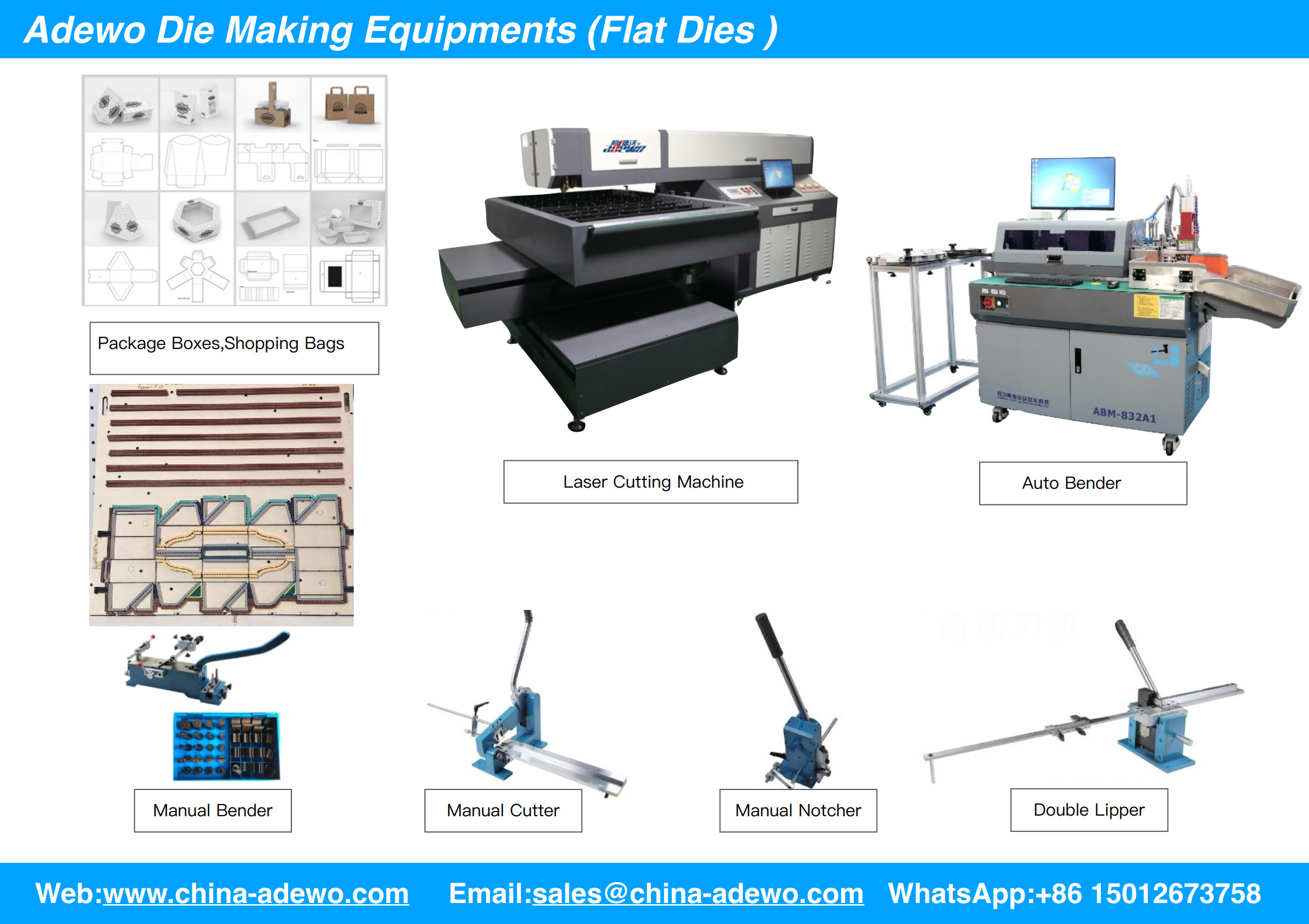
The shift toward flexible packaging and biodegradable films has exposed a weakness in older die making equipment: the assumption that one substrate behaves like another. Modern systems solve this by separating the cutting geometry from the material handling logic, allowing operators to swap pressure profiles, dwell times, and ejection sequences without retooling the entire station. A die that handles 12-micron PET today can be adjusted for 40-micron recycled paper tomorrow, not through brute force but through software-defined parameters that track how each substrate deforms under load.
Rather than relying on fixed cam curves or hydraulic presets, newer machinery uses a combination of load cells and high-speed imaging to characterize each new material on the fly. The system measures springback, tensile recovery, and shear behavior during the first few strokes, then automatically tunes the cutting stroke and stripping phase. This closed-loop adjustment prevents the common failure mode where a die works perfectly on virgin polymer but produces ragged edges or incomplete cuts on post-consumer reclaimed material.
For converters running short batches across varied substrates, the advantage is less downtime and fewer rejected sheets. Tooling remains the same, but the machine's control software stores material-specific recipes that can be called up instantly. This approach shifts the bottleneck from mechanical changeover to parameter validation, and it means a single die platform can serve applications ranging from compostable snack wrappers to heavy-gauge industrial liners without sacrificing edge quality or throughput.
When Packaging Shapes Get Complex, Tooling Must Follow
The days when a simple rectangular carton or cylindrical bottle could be produced with off-the-shelf tooling are fading fast. As brands push for distinctive silhouettes, ergonomic curves, and multi-functional closures, the molds and dies behind those shapes must evolve in lockstep. A package with undercuts, thin-wall sections, or asymmetrical contours demands more than a standard cavity—it calls for slides, lifters, and precision alignment systems that can handle the geometry without sacrificing cycle time or part consistency. Tooling engineers now work side by side with packaging designers from the first sketch, anticipating how a complex form will flow, cool, and eject.
Complex packaging also brings new challenges in material distribution and structural integrity. For instance, a bottle with an integrated handle and a sculpted shoulder may look stunning on the shelf, but without carefully engineered cooling channels and balanced gating, the wall thickness will vary, leading to sink marks or warpage. Modern tooling tackles this through conformal cooling—channels that follow the contour of the part rather than straight drilled lines—and through simulation-driven gate placement that keeps the melt front uniform. These refinements are no longer optional extras; they are the baseline for producing a complex package that survives transport, retail handling, and consumer use.
Finally, the cost and lead time of complex tooling have shifted the conversation from one-off custom molds to modular and adaptive systems. Instead of scrapping an entire mold when a package shape changes slightly, manufacturers now use interchangeable inserts, quick-change core/cavity sets, and standardized mold bases that can be reconfigured for new designs. This modular approach lets a single tooling platform support multiple package variants—a big advantage when a product line expands into travel sizes, refill formats, or limited-edition shapes. Tooling no longer just follows the package; it anticipates the next iteration, keeping pace with a market that rewards rapid visual change.
Less Downtime Through Predictive Die Maintenance
Waiting for a die to fail before pulling it off the line turns a minor repair into a full stop. By mounting strain gauges near known stress risers and checking tonnage signatures against baseline curves, maintenance teams can catch micro-cracking and surface galling weeks before they become visible. One stamping operation cut unexpected die changes by roughly a third after switching to this early-warning approach.
The real gain comes from scheduling work during planned gaps instead of reacting at 2 a.m. When a press log shows a gradual drift in stripping force or slight temperature rise on the punch, the die gets pulled at shift change, not in the middle of a run. That predictability removes the scramble for spare components and keeps the line running closer to its actual capacity.
Bridging Digital Design and Physical Cutting Tools
The gap between a pixel-perfect vector file and a clean cut in plywood or acrylic often hides a messy layer of trial and error. Designers spend hours tuning kerf compensation, adjusting bridge placements, and guessing how a bit will behave around tight corners. What if the software understood the tool's physical limits from the start? By treating the cutting head as a collaborator rather than a dumb plotter, we can move past the usual 'export and pray' workflow.
This shift means thinking in terms of material feedback loops. A laser kerf isn't a fixed offset; it changes with focal length, air assist, and even the humidity in the wood. Instead of asking users to input a single number, a smarter bridge between digital models and physical tools would sample small test cuts, measure the actual gap, and adjust toolpaths on the fly. For CNC routers, that could mean using spindle load data to avoid chatter before it ruins a part. The goal is not just to translate geometry, but to translate intent—keeping the crisp edges you drew while accepting the tiny, imperfect realities of a spinning bit or a focused beam.
The most practical bridging happens through plain-language presets that expose what the machine already knows. A user shouldn't have to understand chipload formulas to cut birch plywood cleanly. Instead, they pick a material and a finish expectation, and the system pulls from a shared library of verified settings contributed by other shops. That library grows because every cut becomes a small experiment: speed, feed, and result get logged, and the next person benefits. Over time, the boundary between the screen and the shop floor blurs—not because the software gets fancier, but because it finally listens to what the tool has been trying to say all along.
The Role of High-Precision Lasers in Modern Die Making
High-precision lasers have quietly reshaped die making, moving far beyond the rough cutting tools of a generation ago. Modern dies demand tolerances measured in microns, and laser systems deliver exactly that—clean edges, minimal heat-affected zones, and repeatability that manual methods simply cannot match. In progressive stamping dies or injection molds, a laser can micro-machine vents, hard-to-reach cavities, or fine engraving without touching the workpiece, eliminating tool wear and deflection errors.
The real advantage shows up in complex geometries. Traditional EDM or milling leaves burrs and stresses, but a focused beam vaporizes material layer by layer, allowing draft angles, undercuts, and sharp internal corners that were previously impossible or required secondary finishing. For die makers, this means fewer hand-fitting hours, faster tryout cycles, and the ability to take on intricate consumer electronics or medical device tooling that clients used to source overseas.
Laser texturing and surface hardening also play a quiet but critical role. Instead of acid etching or sandblasting, a pulsed laser creates precise grain patterns on die faces that improve material flow or hide sink marks. Die life often extends because the laser can selectively harden high-wear edges without distorting the overall block. As die making moves toward shorter runs and faster changeovers, high-precision lasers provide the flexibility to adapt tooling on the fly—no longer a one-off investment, but a core part of the workshop floor.
FAQ
For precision package printing, you'll typically need laser die cutters, CNC rule processors, and automated bending machines. Laser systems handle intricate cuts with tight tolerances, while CNC processors shape steel rules accurately. Automated benders reduce manual variance on complex geometries.
It depends on your run volume and complexity. Laser cutting shines for short to medium runs with detailed designs or quick turnarounds, since there's no physical die to fabricate. Traditional steel-rule dies remain cost-effective for very high volumes of straightforward shapes, but they demand more setup time.
Most modern systems handle a wide range—brass, stainless steel, and hardened rule steel for dies, plus wood, acrylic, and phenolic boards for die bases. Some laser-equipped units also process thin aluminum or polymer plates used in specialty packaging.
Automation removes most of the hand-finishing steps that cause variation. For example, robotic rule insertion and laser-guided bending ensure each steel rule is placed within microns of the design, which directly reduces misregistration and waste on the packaging line.
Clean the optics or cutting heads after every shift, check belt tension and linear rails weekly, and recalibrate sensors monthly. For laser systems, monitor beam alignment and replace filters on schedule—neglecting these leads to slower cuts and edge quality drift.
Yes, many hybrid systems now combine routing, laser cutting, and creasing in a single platform. That lets you produce a working sample or short prototype run without building a full steel-rule die first, cutting lead time from days to hours.
Watch for rising scrap rates, longer setup times, or inconsistent rule heights after bending. If you're frequently reworking dies or losing jobs because competitors offer faster turnarounds, upgrading to CNC-driven or laser-assisted equipment usually pays back within a year.
Start by mapping your current design files and plate sizes. Ask the equipment vendor to run a benchmark using your actual CAD files, not demo files. Check compatibility with your prepress software and whether the machine's output matches the press's registration system—this avoids costly integration surprises.
Conclusion
Precision packaging demands equipment that does not merely cut, but places every edge within microns of intent, sheet after sheet, across runs that would dull lesser tools. The machinery behind modern die making has moved far beyond fixed templates, learning to adapt as substrates shift from traditional board to recycled laminates, metallized films, and lightweight composites that resist clean separation. When packaging shapes grow intricate, with sharp folds, nested trays, or structural curves, the tooling must follow without hesitation. High-precision lasers now play a central role, burning through dense materials with a consistency that rotary blades struggle to match. These systems measure and compensate in real time, so the first sheet off the line holds the same geometry as the ten-thousandth, even when ambient temperature or material tension changes.
What keeps a packaging line moving, though, is not just cutting accuracy but the ability to anticipate failure before it interrupts production. Predictive die maintenance turns every impression into data, tracking wear on cutting edges, pressure anomalies, and micro-vibrations that signal pending misalignment. Instead of replacing dies on a fixed schedule, operators replace them when the equipment says so, eliminating guesswork and surprise downtime. Equally important is the bridge between digital design and physical cutting tools. A 3D package concept can flow directly into die-making software, generating tool paths, crease rules, and laser parameters without manual translation errors. This closed loop from screen to cutting bed allows packaging converters to run shorter, more varied jobs profitably, while maintaining the repeatable precision that brands demand for shelf-ready presentation.
Contact Us
Contact Person: KAELYN LEE
Email: [email protected]
Tel/WhatsApp: +86 15012673758
Website: https://www.china-adewo.com