
Silicon Steel Dealer Expertise: Unlocking Reliable Supply Chains for Electrical Steel Applications
2026-08-08
In the world of electrical engineering, the choice of materials can make or break a project. Silicon steel, essential for transformers, motors, and generators, demands not just quality but a supply chain you can trust. As industries push for higher efficiency and lower losses, the role of a knowledgeable dealer becomes critical. This is where Jiangsu Baowu New Materials steps in, combining deep expertise with robust sourcing capabilities to ensure seamless delivery of premium electrical steel. In this post, we explore what truly goes into a reliable silicon steel supply chain and why expert guidance can be the difference between a smooth operation and a costly delay.
Navigating Global Sourcing Complexities for Silicon Steel
Sourcing silicon steel on a global scale introduces a web of challenges that go far beyond basic procurement. Trade policies, tariffs, and geopolitical shifts can suddenly disrupt established supply routes, turning a routine purchase into a logistical puzzle. A seasoned sourcing team knows that monitoring regulatory changes in key markets like China, Japan, and the EU is not optional—it's a daily necessity. Unexpected anti-dumping duties or shifts in export quotas can render a long-standing supplier relationship impractical overnight, forcing companies to pivot quickly to alternative origins.
Beyond the macro forces, material specification mismatches create quiet but costly disruptions. Silicon steel grades that are standard in one region may not perfectly align with the certifications or performance expectations in another. An electrical steel with the same nominal silicon content can exhibit different core loss characteristics due to variations in manufacturing processes or testing standards. This means that a truly effective global sourcing strategy must incorporate deep technical vetting, not just price comparisons. Building direct relationships with mills, investing in third-party testing, and maintaining a dynamic database of approved grades across multiple geographies turns this complexity into a competitive edge.
Logistics and inventory management form the third pillar of complexity. The long lead times inherent in intercontinental shipping for specialty steel demand a buffer-stock strategy that balances cost against the risk of production stoppages. Forward-thinking buyers are blending just-in-time principles with strategic safety stock, using real-time freight data to anticipate delays. They also diversify port options and consider nearshoring or regional mini-hubs to reduce reliance on any single chokepoint. In this landscape, the ability to orchestrate a fluid, multi-origin supply chain is what separates resilient operations from those constantly scrambling to close gaps.
Ensuring Material Authenticity and Grade Compliance
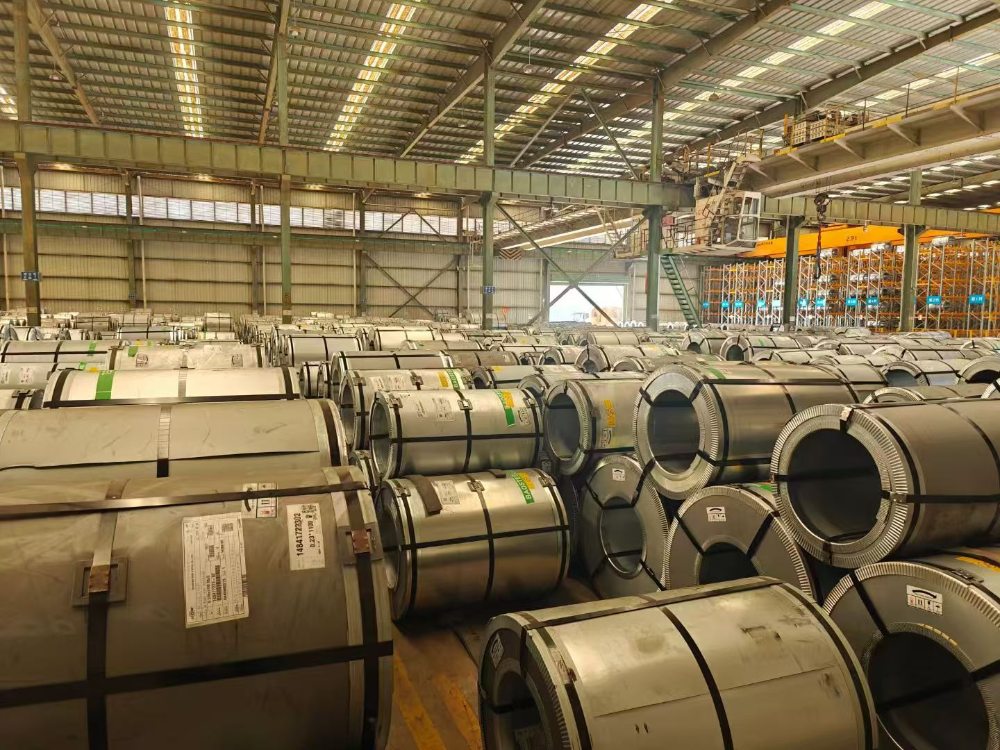
Verifying the true identity of materials starts long before they reach the production floor. It requires a hands-on approach to sourcing, where supplier relationships are built on transparency and shared commitment to quality. We don't rely on paperwork alone—random sampling, third-party lab testing, and detailed traceability logs are part of our routine. Every batch is cross-checked against its mill certificate, and physical properties are tested to confirm they match the declared grade. This level of scrutiny catches discrepancies that would otherwise slip through, protecting both the product and the people who rely on it.
Beyond the initial check, consistent monitoring throughout the manufacturing process is what maintains trust. Our teams use portable spectrometers and hardness testers right at the point of use, not just at receiving. If a material behaves unexpectedly during machining or welding, we stop and investigate before it becomes a bigger issue. This real-time vigilance, combined with a clear chain of custody from origin to installation, ensures that every component meets the required specifications without compromise.
Mitigating Lead Time Risks with Strategic Stockholding
Lead time risks can quietly undermine even the most carefully planned supply chains. A single delayed shipment or production hiccup can cascade into stockouts, lost sales, and eroded customer trust. Strategic stockholding addresses this vulnerability by deliberately maintaining buffer inventory for critical items—not as a knee-jerk reaction, but as a calculated hedge against uncertainty. The goal isn't to hoard goods indiscriminately, but to identify the points in your supply chain where a small extra investment in inventory yields disproportionate protection. For many operations, this means analyzing historical lead time variability, supplier reliability, and the true cost of a missed delivery window, then positioning safety stock precisely where it will absorb the most risk.
Making strategic stockholding work demands a departure from one-size-fits-all replenishment formulas. It requires segmenting inventory based on the interplay between lead time volatility and the impact a shortage would have. High-impact, unpredictable items deserve a more generous safety net, while stable, low-consequence skus can operate closer to just-in-time principles. Regular review cycles are essential—what was an acceptable risk level six months ago might now be too aggressive or too conservative. Companies often find that tying safety stock levels to supplier performance data, rather than relying on static buffers, creates a self-adjusting mechanism. When a key supplier starts slipping, inventory targets automatically edge upward, quietly heading off problems before they escalate.
The real artistry lies in keeping this buffer invisible to the balance sheet's worst impulses. Smart practitioners treat strategic stock not as an asset to be minimized, but as an insurance premium whose value is measured in disruptions that didn't happen. Some embed the cost into product pricing, while others use a dedicated reserve account so the financial hit doesn't distort operational metrics. The best systems even predefine triggers for drawing down and rebuilding these buffers, preventing panic overstocking or premature liquidation. When executed well, strategic stockholding stops being a grudging concession to imperfect supply chains and becomes a quiet source of competitive resilience—the inventory that customers never notice because it's simply there when they need it.
Tailoring Supply Solutions for Diverse Electrical Applications
Every electrical setup brings its own set of demands—whether it's a compact residential panel, a sprawling industrial plant, or a renewable energy installation. We approach each project by first understanding the specific load profiles, environmental conditions, and regulatory requirements, then assembling a supply package that fits without forcing generic components into specialized roles.
Our inventory spans from corrosion-resistant connectors for offshore wind farms to precision transformers for sensitive medical equipment. Rather than offering a one-size-fits-all catalog, we work closely with engineers to adapt standard products or source custom solutions when needed, ensuring compatibility and longevity even in extreme temperatures or high-vibration environments.
Logistics and timing play an equally critical part—delayed deliveries can stall entire projects. By maintaining regional stockpiles and flexible supply chains, we can respond quickly to urgent requests without compromising on quality assurance, so that every component arrives tested and ready to perform within the unique electrical landscape it’s intended for.
Implementing Rigorous Quality Control from Mill to Delivery
Every batch of raw material entering our facility undergoes a thorough vetting process that goes far beyond a simple certificate check. Our team physically inspects for dimensional accuracy, surface defects, and consistency in metallurgical properties, pulling random samples for tensile and hardness testing right on the spot. This ground-level scrutiny sets a foundation that no paperwork can replicate, ensuring that only material meeting our internal benchmarks moves forward into production.
Once the mill begins processing, we don’t just rely on preset machine parameters. Instead, operators are empowered to make real-time adjustments based on continuous monitoring of tool wear, temperature fluctuations, and output thickness variation. Every coil section gets a unique lot code that traces back to the exact furnace batch, rolling pass sequence, and cooling rate, building a digital fingerprint that quality engineers review before any material gets the green light for coating or slitting.
Before final shipment, our delivery readiness check involves more than a dimensional verification. We simulate the transit environment—stacking, vibration, and climate exposure—to catch any hidden weaknesses, then repackage with custom protective wraps if needed. The final sign-off requires a joint review by both the production lead and a logistics specialist, ensuring that what leaves the dock is not just within spec but truly ready for the customer’s immediate use.
Building Resilient Partnerships in the Electrical Steel Market
Resilience in electrical steel partnerships isn't built on rigid contracts or quarterly targets. It emerges when suppliers and buyers treat volatility as a shared design challenge rather than a risk to be offloaded. The most durable relationships form around transparent capacity planning, where both sides reveal their real constraints early—whether it's silicon grade availability, annealing line bottlenecks, or shifting OEM demand curves—and then problem-solve jointly without resorting to penalty clauses. This kind of honesty often feels countercultural in procurement, but in a market driven by niche grain-oriented specs and regional transformer build schedules, pretending certainty is the fastest route to brittle supply chains.
What sets resilient partnerships apart is how they handle the gray zones: the unforecasted rush order for a critical substation project, the quality deviation that falls just outside spec but still works, the sudden logistics snarl at a Balkan port. Instead of defaulting to formal claims, agile partners lean into real-time negotiation, leaning on technical teams rather than legal ones to find workarounds. A mill might reprioritize its continuous casting sequence for a loyal buyer who has historically helped them run low-demand grades without complaint; a stamping house might absorb extra slitting costs knowing the transformer maker will return the balance of trade within the same fiscal cycle. These small, repeated acts of adaptive reciprocity form a shock absorber that no SLA ever could.
Long-term resilience also demands that both parties invest in less visible capability—like jointly training metallurgists on new high-permeability alloys or co-funding a buffer stock of critical grades held at an intermediate location. In the electrical steel sector, where material substitutions are rarely straightforward and regional testing standards diverge, this shared infrastructure often becomes the real moat. When a supply shock hits, the partnerships that survive aren't the ones with the toughest terms but the ones that have built enough connective tissue to reroute around disruption, drawing on deep familiarity with each other’s operating cadence. That familiarity can't be mandated; it's earned through years of showing up, not just when volumes are convenient, but when the market contorts in ways no forecast model predicted.
FAQ
A silicon steel dealer acts as a bridge between mills and end users, managing inventory, providing technical guidance, and ensuring timely delivery of materials that meet specific magnetic and mechanical requirements for transformers, motors, and generators.
Expert dealers anticipate material shortages, navigate logistics bottlenecks, and maintain buffer stocks of critical grades, helping manufacturers avoid production stoppages and reducing lead time volatility.
Look for deep metallurgical knowledge, a track record of on-time deliveries, access to multiple mill sources, and the ability to provide custom slitting or annealing services that align with your manufacturing processes.
Its highly aligned crystal structure minimizes core losses under alternating magnetic fields, directly lowering no-load losses and heat generation, which is vital for meeting energy efficiency standards.
Disruptions can cause extended lead times and price spikes. A well-connected dealer uses alternative sourcing channels, holds safety stock, and offers flexible contract terms to keep your production lines running smoothly.
Non-oriented silicon steel is typically used because it offers uniform magnetic properties in all directions, making it ideal for rotating machines where the magnetic field changes orientation constantly.
Reputable dealers perform incoming inspections, verify magnetic properties with Epstein frame tests, and maintain detailed mill certifications, ensuring each batch meets the exact specifications for your application.
Buyers should watch for thinner gauges that reduce eddy current losses, increased use of high-silicon grades for electric vehicles, and evolving trade policies that may affect global supply dynamics.
Conclusion
Silicon steel dealers with deep expertise are essential in establishing reliable supply chains for electrical steel applications. They navigate the complexities of global sourcing, leveraging extensive networks to secure high-quality material despite fluctuating markets and geopolitical uncertainties. By rigorously verifying mill certificates and conducting independent testing, these specialists ensure material authenticity and precise grade compliance, which is critical for transformer and motor efficiencies. Moreover, they mitigate lead time risks through strategic stockholding programs, maintaining buffer inventories that shield manufacturers from unexpected disruptions and production delays. This proactive approach transforms supply chain vulnerability into a strategic advantage.
In addition, expert dealers tailor supply solutions to meet the diverse requirements of applications ranging from power distribution to precision engineering. They implement stringent quality control measures from the mill to final delivery, inspecting surface conditions, dimensional tolerances, and magnetic properties at every stage. By fostering resilient partnerships built on transparency and shared technical knowledge, they become integration partners rather than mere suppliers, ultimately driving innovation and long-term reliability in the electrical steel market.
Contact Us
Contact Person: Zoe Liang
Email: [email protected]
Tel/WhatsApp: 86 189 2128 6299
Website: https://www.baowuchina.com