
Substantial Flour Milling Machine Features That Improve Grinding Efficiency
2026-08-26
If your mill is consuming more energy without delivering finer, more uniform flour, the problem usually isn’t the wheat—it’s the machine. Grinding efficiency hinges on a handful of substantial design features that many operators overlook while chasing capacity alone. From our work at PINGLE, these are the engineering details that separate a smooth, high-yield line from one that constantly struggles. Here’s what actually moves the needle.
Pre-milling grain preparation that removes surprises later
Grain that arrives at the mill carries a history you cannot see—field dust, uneven moisture from overnight dew, and the occasional stone that slipped through the cleaner. Skipping a thorough preparation stage is like baking with flour you have never sieved: the first sign of trouble often appears when the rolls start wearing unevenly or the extraction rate drifts from the target. A careful pass over a gravity table and a gentle aspiration lift away the obvious debris, but the real work is in giving the grain a uniform starting condition. This means adjusting moisture content based on the kernel's hardness and letting it rest long enough for water to migrate past the bran into the endosperm, not just sit on the surface.
The resting or tempering period is where many surprises are either created or avoided. Too short, and the bran shatters into tiny fragments that contaminate the white flour, forcing you to re-sift or accept a darker product. Too long, and the endosperm turns gummy, sticking to roll corrugations and reducing throughput. Experienced millers learn to read the grain by pinching a kernel between thumb and forefinger—if it flattens without cracking cleanly, it needs more time; if it snaps like glass, you have waited too long. Small batch tests with a laboratory mill can reveal the exact tempering curve for a given lot, saving you from adjusting the whole line later.
Another layer of preparation involves removing the so-called 'invisible surprises'—grains that look normal but have been heat-damaged or frost-shriveled. These can pass visual inspection yet behave unpredictably under pressure, producing off-flavors or clogging the sifters. A density separator using air and vibration sorts kernels by weight, sending the light or hollow ones to a separate stream. Pair this with a strong magnetic trap just before the first break roll, and you have a simple but effective filter for the kind of debris that would otherwise show up as a sudden drop in flour quality. When the preparation stage is done properly, the mill itself runs quieter, the rolls last longer, and the flour that comes out the other end is predictable enough that you can plan your blends without second-guessing.
Roll gap settings you can fine-tune without stopping the line
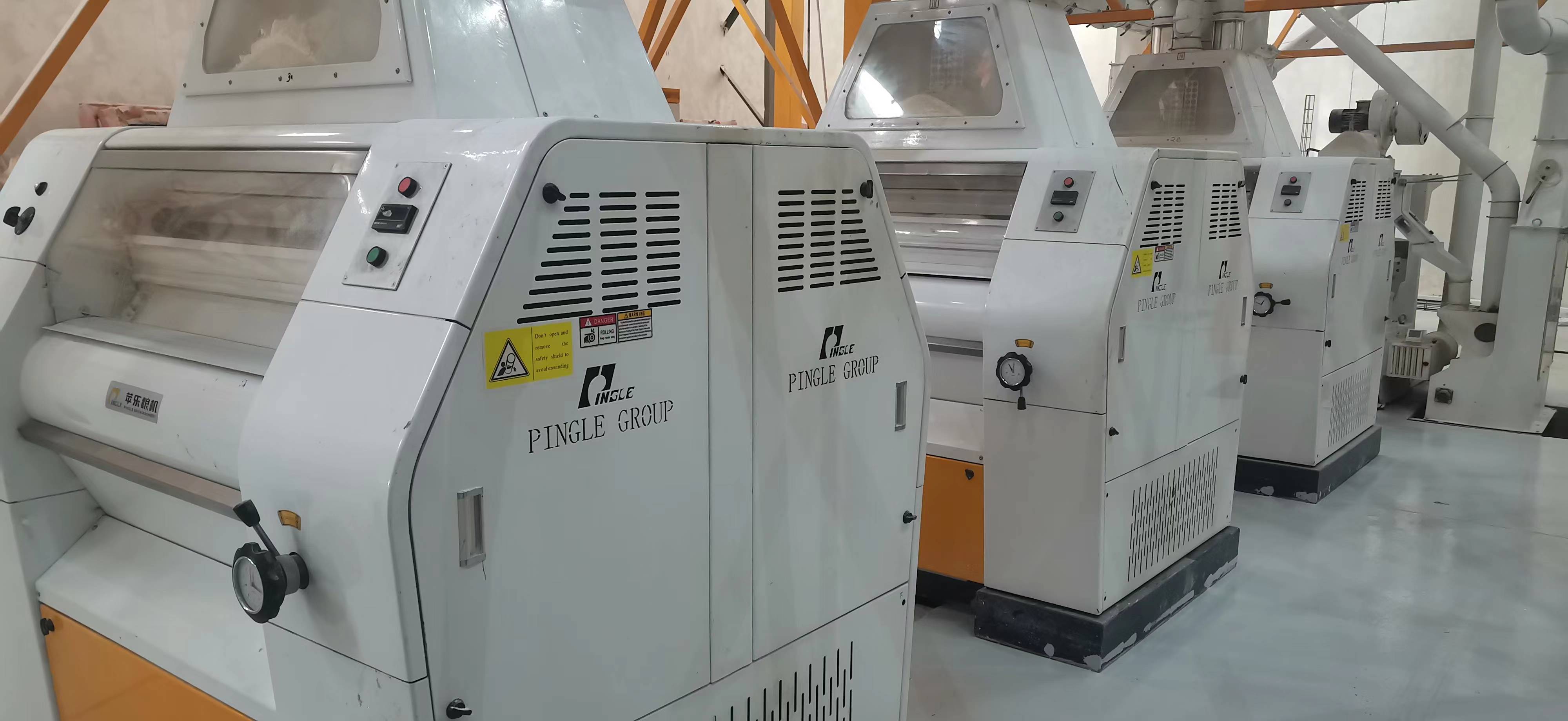
On modern rolling lines, the ability to adjust roll gaps while the mill keeps running is a real advantage. Instead of shutting down for every minor thickness change, operators can make small, precise tweaks using hydraulic or electromechanical actuators. This speeds up changeovers and reduces scrap, especially when switching between product grades or responding to gradual roll wear. The key is having a control system that smooths the transition so the strip doesn't get marked or snapped.
Fine-tuning the gap without stopping usually involves a combination of feedback from thickness gauges and preset models that anticipate the needed adjustment. Small corrections, often in the range of microns, are applied gradually across several stands to maintain stable tension and flatness. Some mills also use automatic gauge control (AGC) that continuously trims the gap based on real-time measurements. This not only saves downtime but also improves yield, because operators can dial in the target thickness while the line produces saleable material.
Not every adjustment should be made on the fly, though. Large changes in roll gap or sudden shifts can overload the motor or cause strip breaks. Experienced operators know the safe limits for their particular mill and usually keep on-the-fly adjustments within a narrow window. For anything bigger, a planned stop might still be needed. But for day-to-day fine control, the ability to tweak roll gaps without stopping the line is one of those small features that quietly improves productivity and product quality.
Sifting surfaces designed to shed flour instead of clogging
Anyone who has sifted flour more than a few times knows the familiar frustration: after a dozen passes, the mesh starts holding onto fine particles, turning a simple dusting into a series of smacks against the rim. The problem isn't just inconvenience—those clogged openings force uneven distribution, leaving dense pockets in cake batter or clumps in a dusting of powdered sugar. Standard wire mesh, however fine, tends to accumulate residue because the tiny fibers offer microscopic ledges where starch and protein particles can lodge and build up. A better approach starts with the surface itself, rather than asking the user to bang the tool harder or wash it mid-recipe.
The shift comes from reconsidering what the flour touches as it passes through. Some designs use a single sheet of perforated stainless steel instead of woven wire, eliminating the crisscross junctions where buildup typically begins. Others etch the openings with a slight inward taper—wider on the entry side, narrower on the exit—so that each shake pushes particles through rather than letting them settle on a flat rim. More unconventional surfaces apply a micro-texture, either through fine bead blasting or a food-safe silicone-infused finish, which reduces the contact area available for adhesion. Even the choice of hole geometry matters: rounded slots or elongated hexagons outperform plain circles because they break up the static friction that lets flour form a film. These aren't gimmicks; they change the physics of how a dry powder interacts with a rigid surface, favoring slip over stick.
In practice, the difference shows up quickly. A sifter built around a shed-friendly surface will handle high-gluten bread flour, low-moisture cake flour, and even fine cornstarch without requiring a mid-task pause to clear the mesh. There's still some residue over time—no surface is perfectly self-cleaning—but it wipes off with a dry brush rather than needing a soak and scrub. For anyone who bakes regularly, that's a meaningful step up from the old tin-can model. The real test comes when you're dusting a work surface with cocoa or icing sugar and the flow stays consistent from first pass to last, leaving a thin, even layer instead of a speckled mess. That consistency is what turns a basic kitchen tool into something you actually reach for without thinking twice.
Airflow routing that pulls heat away from the grinding zone
In precision grinding, the way air moves through the machine is rarely given the attention it deserves. Most of the focus goes to wheel speed, coolant pressure, or abrasive selection, yet the air currents created by a rotating wheel can trap a layer of hot, stagnant air right at the grinding zone. This layer acts like a thermal blanket, holding heat against the workpiece and wheel, accelerating thermal damage, and reducing dimensional stability. By deliberately routing that airflow so it pulls heat away instead of letting it settle, the entire grinding process becomes more forgiving and consistent.
Instead of fighting the wheel's natural air stream, a considered airflow routing uses it as a built-in heat extractor. Small changes to guard geometry, the addition of discrete air baffles, or even repositioning the coolant nozzle to create a low-pressure wake can redirect the boundary layer so that hot air is drawn outward and fresh, cooler air is pulled across the contact arc. This approach works with the machine's existing motion rather than against it. The result is a grinding zone that stays measurably cooler without simply flooding it with more coolant, which often creates its own problems like mist, drag, and uneven cooling.
Operators who try this kind of routing typically notice fewer burn marks, less wheel loading, and a steadier size control over long production runs. It is not a dramatic, one-time fix but a subtle shift in how the machine breathes. Once the airflow is pulling heat away from the zone instead of trapping it there, the whole setup becomes less dependent on perfect coolant pressure or ultra-low wheel speeds. That quieter thermal environment is exactly what high-precision grinding needs to hold tolerances without constant adjustment.
Sensor feedback that catches dull rolls before output drops
Dull rolls rarely announce themselves. By the time a line operator notices a gloss change, a thickness drift, or a rising reject count, the surface has already degraded enough to affect output. Sensor feedback closes that gap. Instead of waiting for visible defects, the system tracks subtle shifts in vibration, load, and surface interaction at the roll face, flagging the early stages of wear long before it translates into measurable production loss.
The real advantage is timing. Continuous feedback builds a baseline for each roll position, so an alert isn't triggered by a single noisy reading but by a pattern that deviates from normal running behavior. Maintenance teams can then schedule a regrind or replacement during a planned stop rather than reacting to a sudden drop in quality. That changes roll upkeep from a guessing game into a predictable, low-drama part of the line.
Wear components built for fast swaps and less idle time
Downtime in the field is rarely a single moment—it's a cascade. A worn tooth, a cracked adapter, a seized pin. Each one eats into hours that could have been spent moving material. The fix isn't just stronger steel; it's designing wear parts that swap in minutes, not shifts. When a bucket edge or wear plate is held by a handful of accessible bolts instead of a web of welded gussets, the machine breathes again before the crew finishes their coffee.
The real savings show up in the small intervals. A lip shroud that slides over a corner and locks with a single hammer tap. A heel shroud that doesn't require lifting the bucket off the ground. These aren't just conveniences—they're deliberate geometry choices. The taper on the boss, the chamfer on the slot, the pre-applied thread compound on the fastener. Every detail reduces the window between broken and back to work.
Less idle time also means fewer rushed replacements. When a crew knows a swap takes twenty minutes instead of two hours, they're more likely to do it at the first sign of wear rather than pushing the component to catastrophic failure. That protects the parent metal underneath, extends the life of adjacent parts, and keeps the excavator or loader where it belongs—not parked beside a tool cart waiting for a welder.
FAQ
The biggest gains come from using larger diameter rolls with optimized corrugations and differential speeds. Combining that with a precise, backlash-free roll gap adjustment system lets the mill maintain a uniform shear force across the entire roll length, so more kernels are cracked cleanly on the first pass instead of being crushed repeatedly.
When the feed rate changes or roll temperature shifts, automatic gap control responds within seconds to keep contact pressure steady. That prevents over-grinding during light loads and under-grinding during surges, which means the stock moves through the mill at a predictable rate without producing excessive fines.
Heat denatures gluten and can make the endosperm sticky, reducing separation efficiency. Water-cooled rolls, internal air circulation around the grinding chamber, and thermal sensors that adjust feed speed all keep the stock temperature below critical limits. This preserves protein quality and avoids downtime from gummed-up sifters.
Proper tempering toughens the bran and softens the endosperm before the first break. When this is done inside the milling line with controlled moisture addition and resting bins, the kernel structure breaks more predictably, so less energy is wasted fracturing tough bran and the extraction rate improves without pushing the rolls harder.
After each grinding stage, sifters and purifiers have to remove the correctly sized flour and semolina quickly. If separation is slow or inaccurate, fine particles get sent back to the rolls needlessly. High-efficiency sieves with longer screen life and better air aspiration keep the load on downstream grinding stages lower, freeing capacity for new stock.
A consistent feed is the first requirement for stable grinding. Modern feeders use load sensors and variable-speed augers to spread kernels evenly across the entire roll face. When the feed is uniform, the rolls don't experience localized wear or pressure spikes, so the mill can run closer to its rated capacity without choking or starving.
Yes, variable frequency drives and direct-coupled high-efficiency motors let operators fine-tune roll speed for each wheat type and desired granulation. This reduces belt losses and allows rapid speed changes without stopping the line. In practice, mills using these drives often see a lower energy per ton while maintaining the same or better extraction.
Sensors on roll gap, motor load, stock temperature, and sifter throughput send real-time data to a control panel. When deviations appear, the system can adjust feed rate or roll pressure automatically before product quality drops. Over time, the recorded data also helps schedule roll regrinding and bearing replacement, preventing the slow efficiency loss that comes from worn surfaces.
Conclusion
A flour mill stops being a bottleneck the moment its equipment anticipates trouble instead of reacting to it. Pre-cleaning and conditioning grain before it ever reaches the first break roll removes stones, tramp metal, and moisture surprises that would otherwise tear flutes or force emergency shutdowns. That kind of preparation sets the stage for what happens at the roll gap. Instead of locking operators into a single setting, modern mills let you adjust the gap on the fly, tweaking the crush while the line keeps moving. This means you can chase the exact particle size you want without burning hours on stoppages. Right after grinding, the sifting surface does the quiet work of separating flour from middlings. A well-designed sieve jacket sheds fine particles continuously, so the mesh stays open and throughput doesn't sag halfway through a shift.
Heat is the silent enemy of milling consistency. Routing airflow directly across the grinding zone pulls warmth away from the rolls and the stock, protecting gluten quality and preventing the sticky buildup that makes screens blind. But even the best airflow cannot tell you when a roll has lost its edge. That is where sensor feedback earns its place. By tracking vibration, temperature, and power draw, the system flags dull corrugations before the extraction rate dips. Once a roll does need replacing, the difference between a good mill and a great one is often mechanical design. Quick-release housings, segmented liners, and pre-aligned bearing cartridges let a maintenance crew swap wear parts in minutes rather than hours, cutting idle time and keeping the mill's rhythm intact.
Contact Us
Contact Person: Jiakuo Wu
Email: [email protected]
Tel/WhatsApp: +86-13011566087
Website: https://www.pinglemachine.com