
Top 4G/5G Radio Devices for Seamless Mobile Connectivity
2026-09-26
Remember the last time your video call froze right in the middle of an important conversation? Weak mobile connectivity isn't just annoying—it's costly. With 4G and 5G networks expanding, the right radio device can mean the difference between a rock-solid link and constant buffering. But not all hardware is created equal, and sorting through endless “high-performance” claims quickly becomes exhausting. That's why we've zeroed in on devices that actually deliver, including reliable options from lisheng. Here's what truly stands out for seamless mobile connectivity.
Pocket-Sized 5G Hotspots That Keep You Online Anywhere
Slip a 5G hotspot into your pocket and the frustration of hunting for reliable Wi-Fi simply disappears. These palm-sized devices turn a single cellular signal into your own private network, letting laptops, tablets, and even smart glasses connect without draining your phone's battery or data plan. Whether you're on a cross-country train, camped at a music festival, or stuck in a rental car outside a client's office, you get the same low-latency connection you'd expect from a wired desk setup.
What separates a forgettable hotspot from one you'll actually carry every day is how it handles real-world travel. Look for models with swappable batteries, a small status screen that tells you signal strength at a glance, and support for multiple carrier profiles so you can switch SIMs when you cross a border. The best ones also offer a pass-through charging mode, which means you can leave the hotspot plugged into a power bank overnight and wake up to a fully charged pocket router without worrying about heat or overcharging.
Because they're built for motion, these hotspots often beat phone tethering in subtle ways. They hold onto weak signals longer, balance traffic across multiple devices more fairly, and give you a dedicated control app that shows exactly how much data each connected gadget has used. For remote workers who rotate between co-working spaces, airport lounges, and a friend's sofa, that kind of granular control turns a simple gadget into a dependable everyday tool.
Industrial-Grade Radio Modules for Reliable Field Deployments
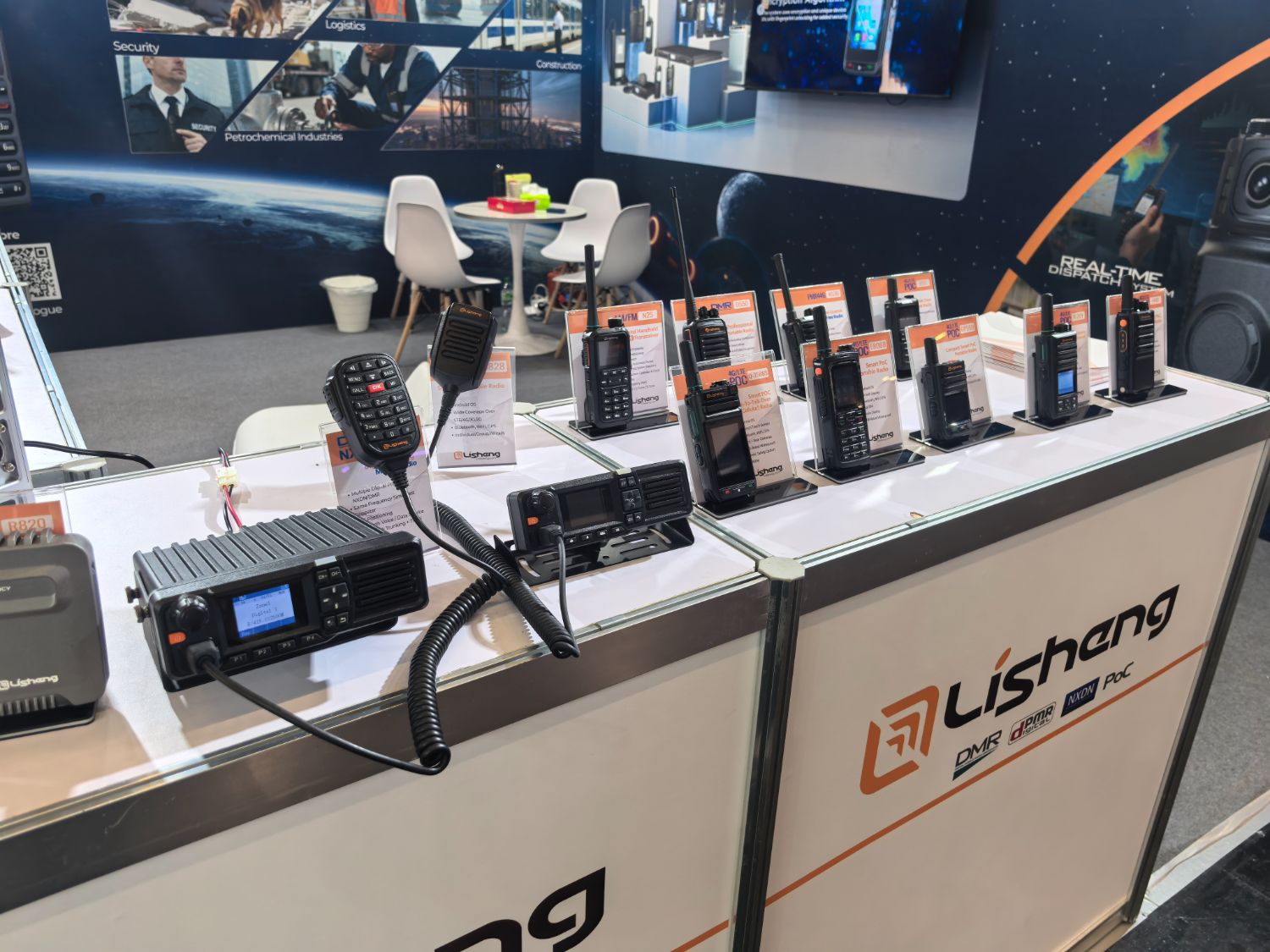
Field deployments punish electronics quickly: dust clogs enclosures, condensation seeps into connectors, and temperature swings stress solder joints. The radio modules meant for these sites start with a conformal-coated PCB and an RF front-end built around narrowband filters, so a nearby variable-frequency drive or diesel generator doesn't wipe out the uplink. Sealed aluminium housings handle direct sun and heavy rain, while vibration-rated mounting keeps the antenna port stable on pumping units and rail cars.
On the air side, reliability comes from choices that favor link budget over headline data rates. Sub-GHz bands carry signals through concrete walls and crop canopies where 2.4 GHz falls apart, and adaptive spreading factors let a node drop to a slower, more robust rate instead of losing packets. Some networks use time-slotted frequency hopping to dodge intermittent interference from industrial machinery. Paired with sleep currents low enough for solar-plus-battery nodes, these modules stay online for years without a site visit, even when mounted next to a grain dryer or a wellhead controller.
Antenna Upgrades That Turn Weak Signals into Steady Streams
Weak signals rarely announce themselves with a full dropout. More often, they creep in as pixelated frames, dropped packets, or that frustrating buffer wheel that spins just long enough to break the moment. The first real fix isn't cranking up transmit power on the other end—it's making your antenna system work smarter with the signal that's already there.
A high-gain directional antenna can focus your reception into a narrow beam, pulling in a signal that an omnidirectional stick would scatter into noise. Pair that with a low-noise amplifier mounted right at the antenna, and you lift the signal before cable losses eat it alive. Add a band-pass filter to strip away nearby interference from other transmitters, and suddenly the same faint whisper becomes a readable stream.
The real difference often shows up after fine-tuning the aim. Even a few degrees off-axis can cost you several dB of gain. Walk the mount through small adjustments while watching signal quality, not just bars, and you'll find that steady stream hiding in what used to be a weak link.
Dual-Mode Routers Built for Constant Network Switching
Most routers lock you into either a wired or wireless setup, but these dual-mode units refuse to pick sides. They shift between Ethernet backhaul and Wi-Fi meshing on the fly, so when one path gets crowded, traffic quietly reroutes without a blinking light or a dropped video call. It feels less like a setting you configure and more like a habit the hardware picked up on its own.
The real test comes in homes where work laptops, gaming consoles, and smart TVs all fight for the same airspace. Instead of throttling the slowest device to keep the network stable, these routers split the load, sending latency-sensitive data over cable while letting casual browsing stay wireless. The result is a network that doesn't just survive constant switching, it treats it as the default state.
Setup is surprisingly dull, in the best way. You plug one in, the mesh nodes find each other, and the router starts learning which connections stay stable and which ones waver. From then on, it's background magic: a muted handoff here, a quiet re-route there, all while you ignore the network entirely.
Vehicle-Mounted Units That Maintain Connection on the Move
Staying online while rolling through tunnels, rural stretches, or dense city blocks isn't just about having a strong antenna. These vehicle-mounted units are built around a simple idea: if the signal drops for a heartbeat, the system should already be hunting for the next best path. They lean on multi-carrier aggregation and intelligent failover, so the dashboard doesn't blink out mid-conversation or during a live data transfer.
The real difference comes from how they handle motion. Instead of treating movement as a disruption, the hardware syncs with high-speed handoff protocols that keep latency flat even at highway speeds. Some models fuse cellular, Wi-Fi, and satellite links into a single steady stream, switching between them without the user ever noticing a beat. That's why teams running patrols, field surveys, or mobile clinics trust these units when every second of connectivity counts.
Mounting options and power conditioning matter just as much as the radios inside. A ruggedized chassis that shrugs off vibration and thermal swings means the unit won't flake after a few thousand miles. When it's done right, the connection feels static even while the world blurs past the windows.
Signal Boosters That Fix Dead Zones Without Extra Data Costs
A good signal booster doesn’t just amplify bars—it solves the actual problem of calls dropping in basements, metal-framed buildings, or rural stretches where the nearest tower is miles away. The real win is that these devices pull in existing outdoor signal, clean it up, and rebroadcast it indoors. Because they work with your carrier’s network rather than replacing it, you aren’t paying for a second data plan or draining a Wi-Fi hotspot’s battery. You just get reliable voice and data in places that used to be dead quiet.
Installation is straightforward if you think in terms of signal flow: an outdoor antenna grabs the faintest usable signal, a coaxial cable feeds it to an amplifier, and an indoor antenna spreads the boosted coverage across your home, office, or vehicle. Most kits include everything you need, and you can often fine-tune the gain to avoid overloading the tower. No special technical background required—just a willingness to mount the antenna where it can see the sky.
Cost-wise, the upfront price of a booster replaces months of missed calls, stalled uploads, and the temptation to buy extra cellular data or a separate hotspot plan. Since the booster uses the same signal your phone already receives, there’s no monthly fee, no data cap, and no need to switch carriers. For anyone tired of walking to one window to send a text, that trade-off usually pays for itself within the first few weeks.
FAQ
M.2 and mPCIe modules built around 3GPP Release 16 or later tend to perform best because they support fast inter-frequency measurements and dual connectivity. Look for units with multi-constellation GNSS, eSIM capability, and 4x4 MIMO antenna inputs to maintain a stable link while moving between cell edges.
A 4x4 MIMO setup with external antennas usually beats integrated options when you're crossing network boundaries. Position two antennas for low-band coverage and two for mid/high-band, and keep them at least half a wavelength apart to reduce correlation and avoid deep fades.
5G NR can combine wider spectrum blocks across low, mid, and high bands with much shorter scheduling intervals. That means the radio can switch or add carriers without the user noticing a pause, while LTE-A often has to rely on slower measurement gaps that introduce brief latency spikes.
Yes, most newer modules support both non-standalone and standalone 5G modes. In non-standalone mode, the device stays anchored to a 4G LTE control channel while using 5G for data, so a 5G signal loss causes a silent fallback instead of a full reconnect.
Prioritize regional or global band support, eSIM/eUICC for remote carrier switching, and certifications from major network operators. Also check the module's power draw in idle mode because roaming devices often spend hours between data bursts and battery life suffers if the radio keeps scanning aggressively.
SDR-based radios let you update the baseband and RF parameters via firmware, which is useful when a carrier refarms spectrum or enables new features like uplink MIMO. Instead of replacing hardware, you can often add bands or adjust filtering through a software patch, extending the device's useful life by several years.
Look for IP67 or IP68 enclosures, an operating range from at least -40°C to +70°C, and PoE or wide-voltage DC input. Devices with an integrated GPS/GNSS receiver and hardware watchdog timer tend to survive longer in remote poles or field cabinets where physical resets are costly.
Radios with advanced beamforming and interference cancellation handle multipath reflections and cell-edge noise more gracefully. Units that support higher-order modulation like 256-QAM and dynamic spectrum sharing also keep throughput stable when hundreds of other devices compete for the same small cell.
Conclusion
Pocket-sized 5G hotspots have changed how people stay connected outside fixed locations, offering a personal bubble of bandwidth that fits in a shirt pocket. Pair one with a well-chosen antenna upgrade and the difference is immediate—weak, fluctuating bars turn into a steady stream capable of video calls and large file transfers. Signal boosters add another layer, rescuing dead zones in basements, rural stretches, or metal-framed buildings without requiring a more expensive data plan or a second SIM. These three pieces work together to eliminate the most common frustrations of mobile connectivity.
Industrial-grade radio modules are built for field deployments where dust, temperature swings, and vibration would kill consumer gear in weeks. Dual-mode routers take over when a vehicle or temporary office must switch between 4G and 5G networks automatically, keeping a VPN or point-of-sale system alive without manual intervention. Vehicle-mounted units push the same idea further, maintaining a stable link at highway speeds or across cell tower handoffs that would normally drop a call. Together these devices cover everything from a backpacker streaming video to a field technician uploading diagnostics from a remote site.
Contact Us
Contact Person: andrea
Email: [email protected]
Tel/WhatsApp: (+86)13960400802
Website: https://www.lishengradio.com/